
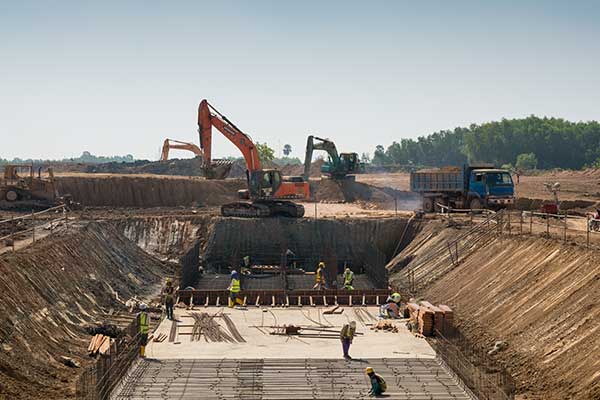
Alamo Heights is a teardown and rebuild market. Most site preparation here happens on a lot that already had a house on it, surrounded by neighbors who are watching, under a code that protects the trees. Hill Country Land Clearing prepares infill sites across 78209, taking a lot from post demolition condition to a graded, drained, buildable pad.
Older Alamo Heights properties routinely hide things that do not appear on any drawing. Abandoned cisterns, old septic tanks from before the sewer connection, buried fuel oil tanks, previous foundation footings, and decades of construction debris used as fill. Any of these under a new pad becomes a settlement problem later. We excavate the footprint properly rather than grading over what is there, and if we find something significant we stop and get you and your engineer involved before it gets covered back up.
Lots here are close together and much of the area slopes toward the creek corridors. Regrade a site carelessly and you have not solved your water problem, you have moved it next door, which is how a rebuild turns into a dispute. During prep we establish positive fall away from the new footprint, keep runoff within the drainage pattern the site plan intends, and route it to a controlled outlet rather than sheeting it across a property line. Fixing this at pad stage costs a fraction of fixing it after landscaping goes in.
Because Alamo Heights regulates trees through its own ordinance, tree protection on a construction site is not optional courtesy, it is usually a condition of the permit. That means fencing at the critical root zone before work starts, keeping material storage and equipment traffic outside it, and avoiding trenching through root systems where utilities can be routed around instead. Damage that shows up two seasons after occupancy still traces back to what happened during site prep.
There is nowhere to put anything. Streets are narrow, many blocks have no shoulder, and neighbors need access to their own driveways throughout. We plan staging and laydown as part of the scope: where the dumpster sits, where soil is stockpiled, where trucks turn, and whether the alley is a viable route. We also keep the street swept, because tracked mud on a residential block generates complaints faster than noise does.
We read the site plan and grading plan and hit the elevations the civil drawings call for, coordinate with the surveyor on staking, and stay out of the way of the trades stacked behind us. Where we see a conflict in the field, like a proposed pad sitting in the natural drainage path or a utility route running straight through a protected root zone, we raise it before it becomes a change order rather than after.
Demolition, tree removal, and site work in Alamo Heights go through the city rather than through San Antonio, and requirements differ. The owner or general contractor holds these approvals. We work within them, follow the conditions attached, and schedule around approval timing instead of assuming it will sort itself out.
There is rarely room to balance cut and fill on a lot this size, so material usually has to move on or off the property. Topsoil stripped from the building envelope gets stockpiled where the lot allows and reused for final grade rather than being hauled away and bought back later. Select fill, base material, and spoil removal all get scheduled around street access and neighbor tolerance, since a continuous stream of trucks on a residential block causes friction that a planned delivery window does not.
New service runs, sewer connections, and gas lines on an infill lot frequently conflict with something already in the ground or with a protected root zone. We prefer to identify those conflicts during prep, when a route can still be changed cheaply, rather than after a trench is open. Where a line has to pass near a preserved tree, boring under the root zone is generally the better answer than cutting straight through it.
Site preparation across Alamo Heights, Terrell Hills, Olmos Park, Lincoln Heights, Northwood, and adjacent San Antonio neighborhoods in and around 78209.
Send the site plan, or just the address and what is going in. Call 210-942-1961 to schedule a walkthrough.
That is most of what site preparation looks like in Alamo Heights. We come in around demolition, remove old foundation material and buried debris, grub the building envelope, backfill and compact where the previous structure sat, and grade the lot to the elevations on the plan. Sequencing with the demolition contractor and the builder is part of the job.
The property owner or the general contractor. Alamo Heights issues its own permits through the city, separate from San Antonio, and demolition, tree removal, and land disturbance can each carry requirements. We work within the approved permits and follow the conditions attached to them, and we will tell you what your project is likely to need, but we do not file on your behalf.
Protective fencing goes up at the critical root zone before work starts and stays up through construction. No equipment traffic, material storage, or spoil stockpiles inside that line. Where utilities have to cross a root zone, boring or routing around is preferable to trenching through. On oaks, any wound during the high risk season gets painted the same day.
We stop and tell you. Older properties in this area frequently have abandoned tanks, cisterns, and buried fill that predate current records. Those have to be properly removed or filled rather than covered over, since a void under a new pad becomes a settlement crack later. It is handled as an additional scope item once you and your engineer decide on the approach.
Often yes, without a full rebuild. Regrading to establish fall away from the structure, reshaping swales, and correcting where a previous project pushed water the wrong direction all address the common causes. We do look at where the water ends up, since a fix that solves your problem by sending water onto a neighbor is not a fix worth having.
It gets planned before mobilization. Options are the lot itself where the footprint allows, the alley where one exists and access can be maintained, or limited street staging coordinated so neighbors keep driveway access. We keep the street swept throughout, which prevents most of the friction that comes with construction on a residential block.
A straightforward lot can be pad ready in under a week. Complications extend that: buried structures, significant cut and fill, rock, extensive tree protection requirements, or wet weather. Approval timing on permits is often the longer variable. We give a schedule with the quote and update it when field conditions change.