
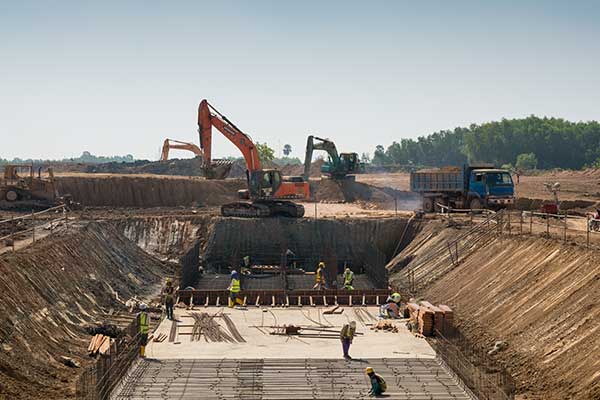
Excavating in Garden Ridge involves a variable that most sites do not have: you do not entirely know what is under there. Karst limestone contains voids, solution cavities, and fractures, and they do not appear on any drawing. Add the Edwards Aquifer Recharge Zone requirements on top and site preparation here needs to be approached with more care than the same job would need a few miles east.
This is the specific risk here and it is worth understanding before you break ground. Excavating on karst can open a cavity that nobody knew existed, sometimes small, occasionally not. If that happens under a proposed pad or a pool, it is a structural matter requiring your engineer rather than something to fill and forget, and depending on what the feature turns out to be it may also carry regulatory implications. Our approach is straightforward: if we open something, we stop and get you and the right professionals involved rather than covering it up. Nobody benefits from a void under a foundation.
Regulated construction activity over the recharge zone can require a plan approved by the TCEQ before work begins, and that process typically includes a geologic assessment by a qualified professional to identify and address sensitive features on the site. What applies depends on the activity and the acreage disturbed. This is the kind of requirement that has to be sorted before the schedule is set, since it cannot be satisfied retroactively and the assessment may change where things can go.
Soil depth varies sharply across short distances here and limestone is frequently close to the surface. Excavating a pool or benching a pad often means ripping or hammering rather than digging, and that is usually the largest single variable in the price. The offset is that excavated limestone, processed and compacted, makes excellent driveway and parking base, so material coming out can reduce material you would otherwise import. We assess soil depth on site rather than quoting a pad from a plan set.
On the recharge zone, where you send runoff matters more than usual. Concentrating water from roofs, decking, and driveways into a low spot that happens to be a recharge feature is not a good outcome, because whatever the water is carrying goes with it. We establish positive fall away from structures, route runoff deliberately rather than letting it find its own way, and pay attention to where it ends up rather than treating the property line as the end of the problem.
On site sewage here has to work with thin soil, shallow and irregular rock, and proximity to recharge features, which narrows both system type and placement considerably. Requirements over the recharge zone are stricter than elsewhere for good reason. The design comes from your designer under Comal County requirements, and the field location must be settled before pad grading, since you cannot run construction traffic across it or place fill over it.
Organic material and root balls come out of the footprint entirely, since anything left to decompose becomes a void, and this is not ground where you want to add avoidable voids. Fill goes in compacted lifts rather than being dumped and spread. The pad extends past the structure footprint so edges do not slough, and it is shaped to shed water rather than hold it against a slab.
Pools, casitas, and outdoor kitchens all need service brought to them, and rock makes trenching expensive here. Route selection genuinely matters, both for cost and because a line crossing the root zone of an oak you are protecting is worth boring under rather than trenching through. We look at those routes during site prep, when changing them is still inexpensive rather than after a trench is already open.
Excavated material from a pool or a pad has to go somewhere, and on a wooded lot there is often nowhere convenient. Options are hauling it off, using it elsewhere on the property where grade allows, or processing rock into base for a driveway. We plan that during the quote rather than leaving a mound behind the house, since disposal is a genuine cost and it belongs in the number you see up front.
Site preparation across Garden Ridge, Bulverde, Spring Branch, Schertz, Cibolo, Selma, Universal City, Bracken, New Braunfels, and throughout Comal, Guadalupe, and northern Bexar counties.
Send the plan or the address with photos, plus anything you know about features on the property. Call 210-942-1961.
We stop and get you and the right professionals involved rather than filling it and continuing. On karst this is a real possibility. A void under a proposed pad or pool is a structural matter for your engineer, and depending on what the feature is it may carry regulatory implications as well. Covering it up creates a much larger problem later.
Possibly, depending on the activity and the acreage disturbed. Regulated construction over the Edwards Aquifer Recharge Zone can require an approved plan before work begins, typically including a geologic assessment to identify sensitive features. It has to be handled before the schedule is set, since it cannot be satisfied after the fact and the assessment may change the layout.
It is usually the largest variable and it depends on soil depth and rock hardness, both of which change across short distances here. Rippable material moves far more cheaply than material needing a hammer. The offset is that excavated limestone makes excellent driveway base once processed, so part of the cost returns as material you do not buy.
It depends on the site, and the options are narrower here than elsewhere. Thin soil, irregular rock, and proximity to recharge features all constrain system type and placement, and requirements over the recharge zone are stricter. The design comes from your on site sewage designer under Comal County requirements, and the location needs settling before any grading.
Somewhere deliberate rather than wherever gravity takes it. On the recharge zone, concentrating runoff into a depression that may be a recharge feature sends whatever the water carries toward groundwater. We route it intentionally, establish fall away from structures, and consider where it ends up rather than stopping at the property line.
Yes, with proper preparation. Organic material and roots come out of the footprint entirely, since decomposing material creates voids and this is not ground where you want to add avoidable ones. Fill goes in compacted lifts, the pad extends past the footprint so edges hold, and it is shaped to shed water rather than pond against the slab.
Longer than comparable work on simpler ground. Rock excavation is the usual reason a schedule extends, and approval timing on recharge zone requirements is often the larger variable overall. A straightforward pad may be a week; a pool with significant rock and a new driveway can run considerably longer. We give a schedule with the quote and update it as conditions become clear.