
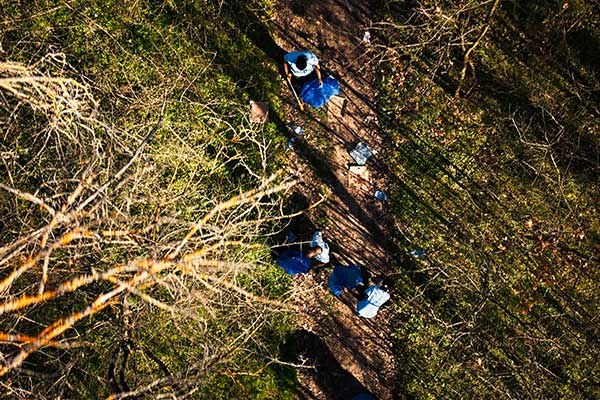
Underbrush clearing in Selma comes up most often on the strips of ground between things: the buffer between a commercial property and the houses behind it, the wooded edge along a drainage, the back section of a residential lot. In every case the point is the same, remove what has volunteered and keep what is doing a job.
The most common mistake we are asked to make is clearing a buffer strip out entirely because it looks untidy. That defeats the purpose. Those strips exist to screen a commercial use from residential neighbours, and removing the screening creates a code problem and an unhappy neighbourhood at the same time. What a buffer actually needs is the volunteer growth taken out, the deadwood removed, and the planted screening given room to recover. Done properly it looks better and screens better than it did.
Volunteer hackberry, chinaberry, and Chinese tallow are the usual culprits. They establish faster than anything planted, outgrow it, and shade it out from above, so a strip that was a healthy screen ten years ago becomes a row of weak trees with bare ground and a clear view underneath. Removing the volunteers while the original planting is still alive is the difference between maintenance and replanting the whole buffer at considerably greater expense.
Out goes hackberry and chinaberry saplings, Chinese tallow, ligustrum, greenbriar, poison ivy, young mesquite and huisache, and volunteer growth crowding the base of better trees. Staying are live oaks, post oaks, cedar elms, planted screening species, and any specimen worth keeping. On commercial work we walk the strip with the property manager and agree what is screening and what is a weed, because those two categories are not always obvious from the parking lot.
The wooded strips along drainages here carry heavier understory than open ground because of the moisture and shade, and they are the most sensitive ground on a property. We work by hand and with minimal machine traffic there and leave the vegetation holding banks in place. Where a drainage is a maintained easement, keeping it clear enough to function matters alongside keeping the trees, which is a balance rather than a single objective.
A managed buffer looks intentional rather than neglected: the planted screening visible and given room, the ground beneath open and clean, and no dead material or dumped rubbish in it. From the residential side it screens better than it did, because the original planting is no longer being shaded out. From the commercial side it stops being the part of the property nobody wants to look at or take responsibility for.
The species removed here nearly all resprout from the crown, and grubbing crowns near trees you are keeping is often inappropriate because it disturbs their roots. That makes understory clearing a maintained condition rather than a permanent one. On a commercial buffer, an interval of every year or two costs a fraction of letting it go and eventually replacing the screening entirely.
Oak wilt is present in this region and live oaks are root grafted. Understory work should not wound oaks at all, but where a cut or scrape happens during the high risk window in late winter and spring it gets painted the same day. On commercial sites where a preserved oak may be tied to a site plan or a mitigation obligation, that precaution protects more than just the tree.
On a longer buffer or a larger property there is no need to do everything at once. Starting with the section causing the most complaints, or the stretch where the screening is closest to failing, handles the pressing problem and lets everyone see the result before committing to the rest. For a managed property that also makes the expenditure easier to phase across budget periods.
Underbrush clearing across Selma, Schertz, Cibolo, Live Oak, Universal City, Converse, Garden Ridge, Kirby, Windcrest, and throughout Bexar, Comal, and Guadalupe counties.
Tell us what the strip needs to do and we will clear to that. Call 210-942-1961.
No, and clearing it entirely usually creates two problems at once. Buffers exist to screen a commercial use from residential neighbours, so removing the screening is both a likely code issue and a guaranteed complaint. What a buffer needs is volunteer growth removed and the planted screening given room to recover.
Usually because volunteer hackberry, chinaberry, and tallow have outgrown it and shaded it out from above. Those establish faster than anything planted and take over within a decade, leaving weak trees with bare ground and a clear view underneath. Removing volunteers while the original planting is still alive avoids replanting the whole buffer later.
We walk it with the property manager and agree what is screening and what is a weed before starting, because that distinction is not obvious from the parking lot. On commercial work where a strip may be tied to an approved landscape plan, matching the work to what the plan requires matters as much as the horticulture.
Yes, carefully. Drainage corridors carry heavier understory and are the most sensitive ground on a property. We work largely by hand with minimal machine traffic and leave vegetation holding banks in place. Where the drainage is a maintained easement, keeping it functional matters alongside keeping the trees, which is a balance rather than one objective.
Most of it, and that is the honest expectation. The species here resprout from the crown, and grubbing crowns near trees you are keeping is often inappropriate since it disturbs their roots. On a commercial buffer, an interval of every year or two costs far less than letting it go and eventually replacing the screening.
Yes, and it is the familiar job: rear sections filled in beneath mature trees, fence line strips growing through the fence, and side yards nobody can maintain. Material is hauled out, the work area is cleaned, and where a machine cannot reach the area, hand crews carry material out instead.
It should not, and we take extra care where a preserved oak may be tied to a site plan or a mitigation obligation. Understory work does not wound canopy trees when done properly, equipment stays out of root zones, and any oak wound during the high risk oak wilt season is painted the same day.