
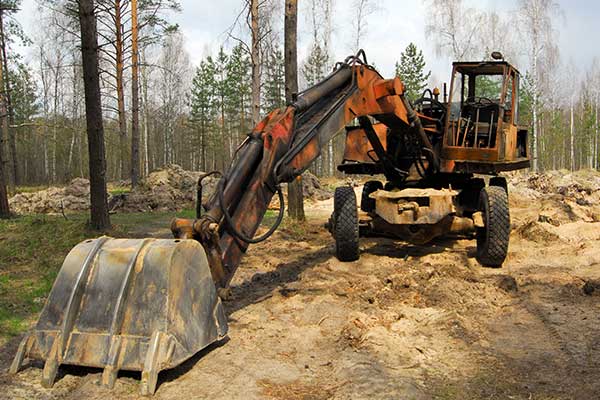
Garden Ridge sits on some of the most interesting ground in the region, and that is not a compliment when you are trying to dig in it. Much of this area is karst: limestone riddled with solution cavities, sinkholes, and caves, sitting over the Edwards Aquifer Recharge Zone. Hill Country Land Clearing works these lots with that in mind, because clearing here carries considerations that do not exist twenty miles east.
Karst is limestone that water has dissolved over a very long time, leaving voids, fractures, and features that connect the surface to the aquifer below. Natural Bridge Caverns is a few minutes away for a reason. On a practical level it means the ground under your lot is not uniformly solid, that depressions in your yard may be recharge features rather than low spots, and that what happens on the surface can reach groundwater more directly here than almost anywhere else. That changes how clearing should be done.
Much of the Garden Ridge area sits over the Edwards Aquifer Recharge Zone, where regulated activities can require a plan approved by the TCEQ before construction begins, and that process typically involves a geologic assessment by a qualified professional to identify sensitive features on the site. Thresholds depend on the activity and the acreage involved. If your clearing is tied to building or significant grading, establish what applies before you start rather than after, because this is not a requirement you can satisfy retroactively.
On most properties, exposed soil is an erosion problem. On the recharge zone it is a water quality problem, because sediment and whatever it carries can reach the aquifer through the features in the rock rather than being filtered through depth of soil that does not exist. For that reason we push nearly every Garden Ridge owner toward methods that leave root structure and ground cover in place unless the project genuinely requires bare ground within a defined footprint.
Garden Ridge is an incorporated city with its own government, and tree preservation is part of its identity as well as its code. Tree removal is regulated locally, and requirements differ from surrounding Comal County. Confirm current thresholds with the City of Garden Ridge before scheduling, and check your deed restrictions as well, since many properties here carry them. The approval belongs to the property owner, and we do not take down a protected tree that has not been cleared.
Grubbing on this ground is unpredictable in a way owners should hear about first. Soil depth varies sharply, the rock is not uniform, and it is entirely possible to open a cavity while pulling a stump. Inside a structural footprint the roots have to come out regardless and we deal with what we find. Outside of that, grinding below grade is usually the better call. If we do open a void, we stop and involve you rather than filling it and moving on, because a void under a future structure is a serious problem.
Burning is not appropriate on residential lots here and is generally prohibited. Around the house most owners want material hauled away. In the wooded back sections of a larger lot, mulching in place is usually preferable, since the chip layer suits the setting and, on the recharge zone, ground cover is exactly what you want rather than exposed soil. Most properties end up using both methods in different areas.
On a wooded lot there is a good argument for opening it gradually rather than all at once. Clear the building envelope or the area you most want back, live with it through a season, and see how the property behaves. You learn where water runs after a heavy rain, which is particularly worth knowing on this ground, and which oaks you are glad you kept. Owners who open a whole lot in one week are the ones most likely to say afterward that they wish they had left more.
Clearing is usually the first step rather than the whole project. A pool builder, a custom builder, or a landscape contractor is generally behind us, and order matters. Some vegetation should come out before excavation so machines have room, and some is better left until after so it is not damaged by construction traffic. We coordinate access, staging, and tree protection rather than clearing to a line and leaving.
We work throughout Garden Ridge and the surrounding area, including Bulverde, Spring Branch, Schertz, Cibolo, Selma, Universal City, Bracken, New Braunfels, Timberwood Park, and across Comal, Guadalupe, and northern Bexar counties.
Send the address, photos of the area, and anything you know about features on the property. Call 210-942-1961.
Karst is limestone that groundwater has dissolved over time, leaving voids, fractures, sinkholes, and caves. Much of the Garden Ridge area sits on it. Practically, it means the ground beneath your lot is not uniformly solid, depressions may be recharge features rather than simple low spots, and surface activity can reach groundwater more directly here than in most places.
It depends on the activity and acreage. Much of this area sits over the Edwards Aquifer Recharge Zone, where regulated activities can require an approved plan before construction begins, typically including a geologic assessment to identify sensitive features. If your clearing is tied to building or significant grading, establish what applies first, since it cannot be satisfied after the fact.
The city regulates tree removal through its own code and requirements differ from surrounding Comal County. Many properties also carry deed restrictions adding their own protections. Confirm current thresholds with the City of Garden Ridge and check your restrictions before scheduling, since approval is the property owner's responsibility rather than the contractor's.
We stop and involve you rather than filling it and continuing. Opening a cavity during stump removal or excavation is a genuine possibility on this ground. A void under a future structure is a serious problem, and depending on what it turns out to be, it may also be a feature that carries requirements of its own. It gets assessed rather than covered up.
Because on the recharge zone exposed soil is a water quality issue as much as an erosion one. Sediment and whatever it carries can reach the aquifer through features in the rock rather than being filtered by soil depth that does not exist here. Leaving root structure and ground cover in place is the appropriate default outside of defined structural footprints.
Inside a structural footprint they have to come out and we deal with whatever the rock presents. Elsewhere, grinding below grade is usually the better outcome, because grubbing on variable karst can mean tearing into rock or opening a cavity and leaving a hole that does not backfill cleanly. We explain which applies on your property during the walkthrough.
Around the house it is hauled off, since burning is not appropriate on residential lots here. In the wooded back sections mulching in place is usually preferable, because the chip layer suits the setting and ground cover is exactly what the recharge zone wants rather than exposed soil. Most properties use both approaches in different areas.