
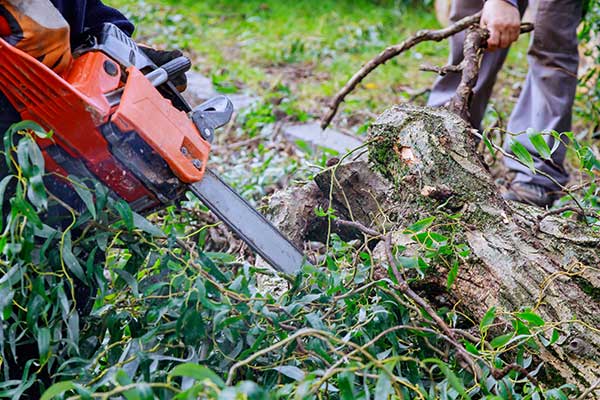
Brush removal in New Braunfels comes down to one question before any others: what is actually growing on your property. The answer splits along the escarpment, and it determines whether you are buying a job that mostly stays done or starting a management cycle. Hill Country Land Clearing handles brush across both sides of the city and the surrounding country.
West of town, Ashe juniper dominates. It moves out of the draws and takes open ground within a couple of decades, and once a stand closes canopy nothing grows underneath. Persimmon, agarita, and whitebrush fill in behind it. The useful thing about cedar is that cut below its lowest green growth it does not resprout from the stump. Return comes from new seed over years rather than regrowth within a season, which makes clearing it genuinely satisfying.
East and south, the picture reverses completely. Mesquite and huisache dominate, with retama, hackberry, chinaberry, and Chinese tallow filling in and prickly pear on the grazed ground. Every one of these comes back from the root crown. Cut a mature mesquite flush and it pushes several new stems within a season, giving you a multi stemmed shrub that is harder to remove than the original tree was. On this side, method is not a preference, it is the whole outcome.
Because the soil east of the escarpment is deep with no rock shelf, an excavator or grubbing attachment can take the root crown out cleanly. That makes real control achievable rather than aspirational. It costs more per acre than shredding or mulching and it is worth it, because shredding a mesquite pasture is a recurring expense forever while grubbing is a job that largely stays done. We quote both so the lifetime comparison is visible rather than hidden.
This was farm and ranch country until very recently and the growth around New Braunfels has been fast enough that plenty of tracts still carry the evidence. Barbed and net wire swallowed by brush, t posts standing in the middle of nothing, cross fencing from when the tract was divided differently, and gates hanging in fences that no longer exist. Wire wraps machine components and is dangerous for anyone on foot, so we look for it deliberately and price its removal as its own line.
Properties west of town sit in genuine wildland urban interface. Cedar is one of the most volatile fuels in Texas and it grows in continuous cover running up slopes toward houses. Clearing brush back from structures, breaking up continuous fuel, and widening driveways so apparatus can get in and turn around are all high value work there. East of the escarpment the fire picture is different and the driver is usually pasture productivity rather than defensible space.
West of town, dry conditions are workable and the main constraints are burn bans and heat. East and south, wet clay stops work entirely, since machines rut saturated ground badly and the ruts set hard. That means the best scheduling window is genuinely different depending on where your property is, and we would rather move a date than damage your ground.
The honest question at the quote stage, particularly east of the escarpment, is whether you want the tract to look clear next month or to be clear in three years. Those are different jobs at different prices. A single mulching pass is inexpensive and temporary on resprouting species. Grubbing crowns costs more and largely holds. Neither is wrong, but choosing without understanding the difference is how owners end up paying twice and feeling misled.
Prickly pear spreads from dropped pads that root where they land, which is why shredding makes the problem larger rather than smaller. Removal means picking it up and hauling it rather than cutting through it, and keeping it separate from material being mulched so pads are not redistributed across the tract. Heavy infestations usually need a second look the following season for whatever regenerated from pieces left behind.
Brush removal across New Braunfels, Gruene, Canyon Lake, Startzville, Bulverde, Spring Branch, Garden Ridge, Schertz, Cibolo, Seguin, Marion, and throughout Comal and Guadalupe counties.
Tell us the address and the acreage and we will tell you which kind of job it is. Call 210-942-1961.
It depends entirely on the species, which depends on your side of the escarpment. Cedar cut below its lowest green growth does not resprout and returns only from new seed over years. Mesquite, huisache, hackberry, retama, and tallow all come back from the root crown within a season unless the crown is removed or treated.
Because cutting removes the top and leaves the root crown, and mesquite responds by pushing multiple stems from the base. A single trunk becomes a multi stemmed shrub within a couple of seasons, and it is harder to remove than the original was. Real control on the east side means taking the crown out rather than just cutting.
On the east and south sides, usually yes. Deep soil with no rock means the crown comes out cleanly, so lasting control is achievable. Shredding a mesquite pasture is an expense you repeat indefinitely. Grubbing costs more once and largely stays done, so compare lifetime cost rather than the price of a single pass.
It gets pulled and priced as its own line. Former ranch and farm ground around New Braunfels almost always carries more buried wire than the owner remembers, and it damages equipment and is hazardous to crews on foot. We walk a tract before quoting specifically to find it rather than discovering it with a machine.
West of town, most of the year is workable and the constraints are burn bans and summer heat. East and south, wet clay stops work outright because machines rut saturated ground and the ruts set hard. Extended dry stretches are the reliable window on that side, so the answer differs by property.
West of the escarpment, seriously yes. Cedar in continuous cover running up a slope toward a house is the scenario fire crews least want to find. Clearing back from structures and widening the driveway so apparatus can turn are high value work. East of town the fire picture is different and pasture productivity is usually the driver instead.
Yes. Mulching and cutting leave the soil and root mat intact and the chip layer protects the ground while grass recovers. It is blade clearing that strips grass and topsoil. On both sides of the city we avoid it unless the project genuinely requires bare ground within a defined footprint.