
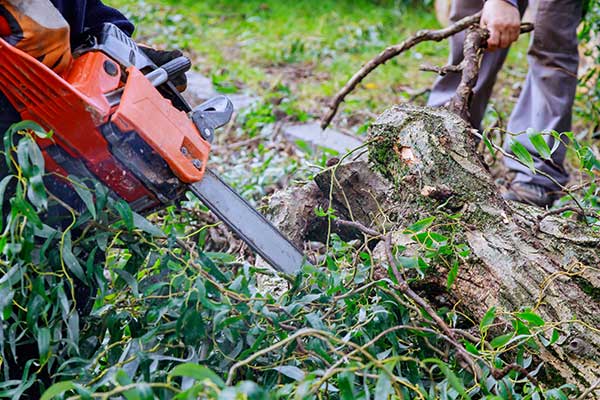
Brush takes South Texas back fast. Skip a couple of seasons on a San Antonio property and cedar seedlings, mesquite, and huisache close in on the fence line, the driveway shrinks, and the back half of the lot stops being usable. Hill Country Land Clearing removes brush across San Antonio and Bexar County on lots, pastures, easements, and neglected acreage, without disturbing the mature trees you want to keep.
Every region has its problem species and ours are stubborn. Ashe juniper regrows from seed in open ground and drinks more water than anything else on the property. Mesquite and huisache resprout aggressively from the root crown if they are only cut at the base. Prickly pear spreads from dropped pads and makes ground impassable for livestock and people alike. Chinaberry, ligustrum, and privet take over creek bottoms and fence rows on the east side. Each of these needs a different treatment, which is why a blanket approach rarely holds for more than a season.
Cutting brush flush with the ground looks great for about six weeks. Mesquite and huisache respond to a clean cut by pushing multiple new stems, so the thicket comes back thicker than it started. Real brush control removes the root crown, mulches the stump below grade, or pairs cutting with follow up treatment. We tell you upfront which species on your land are going to fight back so you can budget for one pass or a maintenance cycle, instead of being surprised next spring.
A skid steer with a brush cutter handles thick understory on flat and moderate ground. A mulching head takes standing brush down to chip in one pass with almost no ground disturbance, which is what we usually recommend near creeks, on slopes, and over the aquifer recharge zone. An excavator with a grapple is the right call when root balls have to come out or when brush is mixed with old fencing, tires, and dumped debris, which is common on long vacant San Antonio lots.
Dry summers put a lot of San Antonio properties one spark away from trouble, especially where cedar grows up against a house or a barn. Clearing brush back from structures gives fire crews room to work. Inside city limits there is a second reason to stay ahead of it, since overgrown vacant lots draw code enforcement notices for tall weeds and rubbish. Clearing is usually cheaper than a repeat citation.
Long neglected lots around San Antonio rarely contain only brush. We routinely pull out old barbed wire and t-posts, buried tires, appliances, construction debris from a previous build, and the remains of fencing that was swallowed years ago. Occasionally there is a well head, a septic lid, or a survey pin under it all. This matters for two reasons. Metal and debris will destroy a mulching head, and buried infrastructure is worth finding before a machine does. We walk the property first and price debris handling separately rather than discovering it mid job.
The number moves on four things: how dense the growth is, how large the woody stems have gotten, how easy it is to get equipment onto and around the property, and what happens to the material afterward. A lot that has been let go for two years is a different job from one that has been let go for fifteen, even at the same acreage, because the stems have gone from cuttable to needing real horsepower. Getting a property on a maintenance cycle after the first clearing is consistently the cheapest way to own land here.
Brush jobs on established lots come with practical constraints that acreage work does not. Equipment has to fit through a gate, cross a lawn without rutting it, and work without dropping material over a property line. On shared fence lines we confirm which side of the fence is yours before cutting anything, and we let neighbors know when work will be noisy. It is a small thing that prevents most of the disputes that come out of clearing work in built up parts of San Antonio.
Brush removal crews run daily across San Antonio, Helotes, Leon Valley, Converse, Schertz, Cibolo, Universal City, Selma, Live Oak, Bulverde, Boerne, Fair Oaks Ranch, Atascosa, Von Ormy, Elmendorf, and the rest of Bexar County.
Send us the address and rough acreage, or just describe what you are looking at. We can usually tell from a satellite view and a few questions what the job needs. Call 210-942-1961.
Brush removal targets the understory and small woody growth while leaving mature trees, topsoil, and general ground contour alone. Land clearing takes a property down to bare or near bare ground, including stumps and root systems. If you want a usable, walkable property that still looks like a property, brush removal is normally the right service.
On most Bexar County land, a cleared property needs attention every one to three years depending on rainfall and species. Mesquite and huisache come back faster than cedar. Properties that get shredded or mowed annually after the initial clearing hold their condition far longer and cost much less to maintain than land left alone for a decade.
Yes. Mulching and cutting leave the root mat and topsoil intact, and the chip layer left behind actually protects the soil while grass recovers. Native grasses typically respond well once cedar and brush stop shading them out and competing for water. Blade clearing is what strips grass, and we avoid it unless the job specifically calls for bare ground.
Yes. Prickly pear needs mechanical removal because cutting it just scatters pads that root where they land. We clear it with a bucket or grapple and pile it separately so it is not spread back across the property during mulching. Heavy infestations sometimes need a second pass the following season.
Fence line work is one of our most common jobs. We clear a working strip on one or both sides of the fence so you can drive it, inspect it, and repair it. Owners usually pair this with clearing gates and interior roads while the equipment is already on the property, since mobilization is a fixed cost either way.
Most brush gets mulched in place and left as ground cover, which is the least expensive option and helps hold soil. It can also be piled for burning when no burn ban is active, chipped and hauled, or loaded and taken to a disposal site. We agree on the method during the quote so there are no surprises.
No, as long as we have walked the property together beforehand and marked what stays. Many of our clients are out of town landowners or investors. We send progress photos and confirm the finished condition before we demobilize. Gate codes and access details can be arranged in advance.