
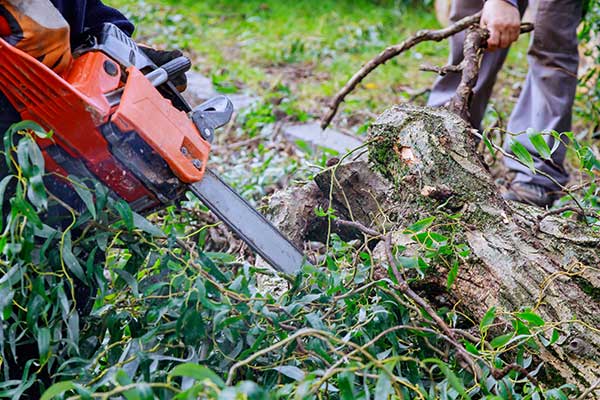
Cedar has been quietly taking Timberwood Park back since the subdivision was built. Nobody made a decision to let it happen. The lots were wooded when they were platted, the understory was never cleared, and Ashe juniper has done what it does for four and a half decades. Hill Country Land Clearing removes brush across these lots and gets properties back to something like the condition owners thought they were buying.
Cedar regenerates from seed and there is no shortage of seed source across northern Bexar County. On a lot where the canopy was left and the understory was never touched, it establishes in the shade, grows steadily, and eventually forms a solid wall beneath the oaks. The change is slow enough that nobody notices it happening and total enough that after a few decades the back of the lot is genuinely inaccessible. That is not neglect on anyone’s part, it is just time.
Ashe juniper dominates, with persimmon, agarita, whitebrush, and greenbriar underneath and prickly pear where there is more light. Cedar has one useful characteristic: cut below its lowest green growth it does not resprout from the stump, so it stays down and returns from seed over years rather than regrowing within a season. The others come back from the root crown, which means a mixed lot needs a mixed approach rather than one blanket treatment.
A wooded half acre with continuous cedar running from the boundary right up to the house is the same fuel arrangement whether it sits on a ranch or in a subdivision off 281. Cedar is one of the most volatile fuels in Texas. Clearing brush back from the house, the garage, and any outbuildings, and breaking up the continuous fuel across the lot, is worthwhile work here. So is keeping the driveway clear enough overhead and wide enough for a fire truck to get in and turn around.
It is easy to assume deed restrictions only concern mature trees, but on lots here they can also address how much of a property may be cleared and whether cut material can be left on site. Selective brush and understory work usually sits comfortably inside those limits since the canopy is untouched, but it is worth confirming with the association before scheduling rather than assuming brush is unregulated because it is not a big tree.
This area carries a heavy deer population and it affects regrowth more than most owners expect. Deer browse everything palatable within reach, which is why the lower canopy often looks trimmed to a line while the understory above it stays dense, and why cedar, which they largely avoid, keeps gaining ground on species they prefer. If you intend to plant after clearing, choose accordingly or plan on protecting what you put in.
Lots here are large enough for privacy and close enough that everyone hears everything. Before cutting along a boundary we confirm which side is yours and what is rooted where, since anything on the neighbour’s side is theirs to decide about. We let adjacent owners know when noisy work is happening and keep material from crossing a line. On lots backing onto common area or greenbelt, we confirm where your ownership actually ends.
Sections of a lot untouched since the house was built hold more than juniper. Old fencing swallowed by regrowth, dumped landscape material, abandoned irrigation, deadfall, children’s play structures from a previous family, and occasionally a cleanout, valve box, or septic component nobody has seen in decades. Metal is what damages a mulching head, so we work by hand into dense material first, separate what is not vegetation, and price that handling honestly.
The first clearing on a lot that has been closing in for forty years is the expensive one, because the cedar has gone from cuttable to needing real horsepower and the volume is high. Everything after that costs a fraction. Owners who bring us back on a light cycle every couple of years never watch the back of the property disappear again and never pay for a full reclaim a second time.
Brush removal across Timberwood Park, Bulverde, Stone Oak, Cibolo Canyons, Fair Oaks Ranch, Garden Ridge, Spring Branch, Hollywood Park, Shavano Park, and throughout northern Bexar and southern Comal counties.
Photos of the house, the driveway, and the back of the lot are the most useful thing to send. Call 210-942-1961.
Because the subdivision was platted through existing woodland and the understory was never cleared. Cedar regenerates from seed, establishes in the shade beneath the canopy, and grows steadily. Over four decades that produces a solid wall beneath the oaks. The change is slow enough that nobody notices it happening and total enough that the back of the lot becomes inaccessible.
New seedlings will keep establishing, since the seed source across northern Bexar County is substantial regardless of what happens on your lot. But cedar cut below its lowest green growth does not resprout from the stump, so what you remove stays removed. That makes it a slow maintenance cycle rather than a battle you have to refight every season.
They can. Restrictions on lots here may address how much of a property can be cleared and whether cut material may be left on site, not just mature trees. Selective understory work usually sits comfortably within those limits since the canopy is untouched, but confirm with the association before scheduling rather than assuming.
A wooded half acre with continuous cedar running from the boundary up to the house is the same fuel arrangement whether it is on a ranch or off 281, and cedar is among the most volatile fuels in Texas. Clearing back from structures and keeping the driveway passable for apparatus are both worth doing here.
Largely what the deer will not eat. Heavy browse pressure here shapes regrowth substantially, and cedar is unpalatable to them, which is part of why it keeps gaining. Native grasses and forbs return where light reaches soil and browse allows. If you plan to plant, choose accordingly or plan on protecting it.
Revisit the area around the house every year or two and the wider lot every two to four years. Because cedar returns from seed rather than stumps, the rate drops noticeably after the first clearing. A property kept on a cycle costs a fraction of what it takes to reclaim one left to close back in over decades.
Yes, up to your line. We confirm which side is yours and what is rooted where before cutting, since anything on the neighbour's side is theirs to decide about. On lots backing onto common area or greenbelt we establish where your ownership actually ends rather than assuming a fence marks it accurately.