
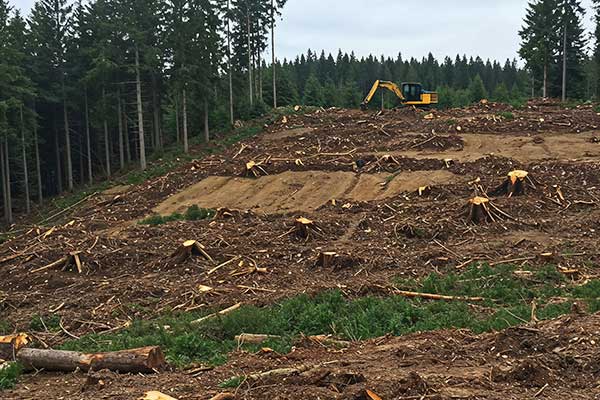
If there is one place in this region where forestry mulching is the obviously correct method, it is Garden Ridge. Mulching clears standing vegetation without disturbing soil, without exposing bare ground, and without moving anything off the property. On terrain where the surface connects to the aquifer more directly than almost anywhere else, that is not just convenient, it is the right way to work.
A mulching head is a rotating drum with carbide teeth mounted on a tracked machine or an excavator arm. It cuts standing material from the top down and reduces it to chip where it stands. The machine tracks over its own mulch and never digs. Nothing is piled, nothing is burned, nothing is trucked off. The property goes from impassable to walkable in a single pass and the ground itself is left as it was.
Three things line up. Soil here is thin over limestone and there is not much of it to lose, so anything that strips it takes something that will not come back. The area sits over the Edwards Aquifer Recharge Zone, where exposed soil and the sediment it produces are a water quality concern rather than merely an erosion nuisance. And the ground is karst, meaning there are features connecting the surface to the aquifer, so keeping ground cover intact matters more here than a general environmental preference would suggest.
The dominant species here is Ashe juniper, and it happens to be ideal for this method. It feeds through a head efficiently, the chip breaks down into a stable cover, and crucially, cedar cut below its lowest green growth does not resprout from the stump. That means mulching produces a genuinely lasting result on a cedar dominated lot, which is not true everywhere. Return comes from new seed over years rather than from stumps within a season.
Close to the house, the chip layer is usually not what an owner wants across a maintained landscape, and around pools, patios, and beds the machine has neither the room nor any business working. Those areas get hand crews and haul off. Mulching also leaves stumps and roots, so it is no substitute for grubbing inside a structural footprint. Most properties here end up with both methods applied to different areas, which is the right answer rather than a compromise.
Before we start we walk the area and note any depressions, rock openings, or spots that take water after a storm. Those get excluded from the machine’s working path rather than driven over repeatedly. Tracked equipment spreads weight well, but no machine should be running back and forth across a possible recharge feature. If you know where anything like that sits on your property, tell us at the walkthrough.
It shades thin soil, holds moisture, slows runoff, suppresses some regrowth by keeping light off seed, and breaks down into organic matter over several seasons, which on ground this thin is genuinely valuable. Depth depends on the volume standing, and heavy cedar leaves several inches. If you intend to plant or seed, we can thin the heaviest concentrations so material reaches soil.
A dozer pushes material into piles and takes soil with it. On ground carrying inches of soil over limestone that loss is permanent, and over the recharge zone it also creates exposed surface that produces sediment. Blade work remains correct where a project genuinely needs bare ground inside a defined footprint. Everywhere else here, mulching gives you the cleared property without the cost that scraping imposes on the ground itself.
A few details prevent most first day problems. Mark anything you want left standing, including young oaks that disappear inside dense cedar. Point out irrigation, septic components, buried metal, old fencing, and any depressions or rock openings on the property. Confirm gate width, overhead clearance along the driveway, and where a lowboy can stop to unload. Ten minutes on this saves far more time than it costs.
Mulching throughout Garden Ridge, Bulverde, Spring Branch, Schertz, Cibolo, Selma, Universal City, Bracken, New Braunfels, Timberwood Park, and across Comal, Guadalupe, and northern Bexar counties.
Send the address and photos of the area and the driveway approach. Call 210-942-1961.
It avoids the main way clearing affects water quality here, which is exposed soil producing sediment. Because the machine never digs and the chip covers the ground, soil and root structure stay in place. On the recharge zone, where surface features connect fairly directly to groundwater, that is the appropriate default outside of defined structural footprints.
Cedar cut below its lowest green growth does not resprout from the stump, so mulched juniper largely stays down. New seedlings establish over time from the surrounding seed source, but that is a slow return measured in years rather than regrowth within a season. Persimmon and other root crown sprouters in the mix do come back through the chip.
No. The head grinds material to or slightly below grade and the root system stays in place, which here is a feature rather than a limitation since the roots continue holding thin soil. If you need stumps out for a pool, foundation, or driveway, that is grubbing work inside a defined footprint and it gets quoted separately.
Yes, and we exclude them from the machine's working path rather than driving over them repeatedly. Point out any depressions, rock openings, or areas that take water after a storm during the walkthrough. Tracked equipment distributes weight well, but a possible recharge feature is not somewhere to be running back and forth regardless.
An inch to several inches depending on how much material was standing, with heavy cedar leaving more. On thin soil over limestone the chip is genuinely beneficial, holding moisture and adding organic matter as it breaks down. If you are planting in the area, we can thin the heaviest concentrations so material reaches the soil.
Usually, because disposal is a significant cost and mulching eliminates it entirely. Nothing is trucked off the property. The trade off is that you get a chip layer rather than clean ground, and stumps remain. Close to the house most owners still prefer haul off, so many properties use mulching in the back sections and hauling near the residence.
Possibly. Deed restrictions may address clearing extent and whether material can be left on site, and the city's tree code may capture stems above a certain size regardless of the method used to remove them. Mulching is generally well accepted here, but confirm your specific restrictions before scheduling rather than assuming the method exempts the work.