
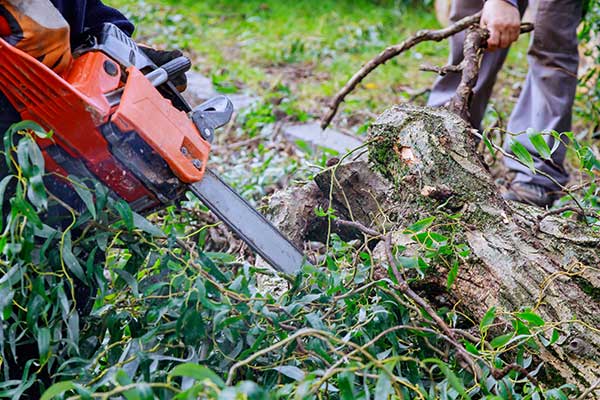
Brush management is not a cosmetic service on Kendall County land. It is how you keep pasture in production, keep a fence inspectable, keep water in the ground, and in many cases keep a property in compliance with a wildlife management plan. Hill Country Land Clearing handles brush removal across Boerne and the surrounding ranch country, at whatever scale the tract requires.
Ashe juniper is the headline. Left unmanaged it moves out from the draws and takes open grassland within a couple of decades, and once a stand closes canopy almost nothing grows underneath it. Behind cedar comes persimmon, agarita, whitebrush, and mesquite on the lower elevations. Prickly pear and tasajillo fill the gaps and make ground impassable for cattle and people. Each responds differently to being cut, which is why one indiscriminate pass rarely holds for more than a season or two.
Under Texas open space valuation, brush management is one of the practices that can count toward a wildlife management plan, which is why so much of this work around Boerne is driven by the appraisal calendar rather than by aesthetics. What matters is that the work matches the plan on file: the right species targeted, the right amount of cover retained, records kept. Tell us what your plan specifies and we will clear to it. Confirm the details with the Kendall County Appraisal District or whoever prepared your plan, since we are not the ones who defend it.
Landowners undertaking brush management in this region are sometimes eligible for technical help or cost share through NRCS conservation programs, and various water and conservation entities have funded cedar removal work in the Hill Country over the years because of the water yield argument. Availability, sign up periods, and requirements change, and enrollment usually has to happen before the work is done rather than after. If cost share is part of your plan, get it lined up first and tell us what conditions come attached.
Cedar has one useful trait: cut below the lowest green growth it does not resprout. Mesquite, persimmon, and whitebrush are the opposite and will push multiple stems from the root crown after a clean cut, coming back thicker than they started. Prickly pear spreads from any pad that gets dropped and rooted. Knowing which of these dominate your tract determines whether you are buying a one time job or starting a management cycle, and we tell you which before you commit.
Boerne sits in genuine wildland urban interface. Cedar is one of the most volatile fuels in Texas, it burns hot and fast, and a mature stand running up to a house is the scenario fire crews least want to find. Clearing brush back from structures, widening ranch roads so apparatus can turn, and breaking up continuous fuel between the pasture and the house are all straightforward work with a very high return if the year goes badly.
Small tracts and tight areas get a skid steer with a cutter or mulching head. Larger acreage gets bigger tracked machines that can sustain production across the day. An excavator with a grapple comes out when root crowns have to be pulled, when brush is mixed with old net wire and t posts, or when material has to be stacked for burning. On steep ground the machine choice is a safety decision as much as a productivity one.
Long neglected Kendall County tracts hold more than plants. Old net wire and barbed wire swallowed by regrowth, t posts, abandoned corrals, dumped appliances, and occasionally a well casing, a cistern, or a survey pin nobody has seen in thirty years. Metal will damage a mulching head and buried infrastructure is worth finding before a machine does. We walk the tract first, flag what we find, and price debris handling for it rather than absorbing a surprise halfway through the job.
The first pass on a property that has been unmanaged for twenty years is always the expensive one, because stems have gone from cuttable to needing serious horsepower and the volume is enormous. Everything after that is cheap by comparison. Owners who bring us back every couple of years never see the thicket return and never pay for a full reclaim twice. It is the single most cost effective way to hold Hill Country land.
Brush removal across Boerne, Comfort, Sisterdale, Welfare, Waring, Kendalia, Bergheim, Fair Oaks Ranch, Spring Branch, Pipe Creek, Center Point, and throughout Kendall, Kerr, Bandera, and Comal counties.
Tell us the acreage, the road access, and whether the work is tied to a management plan or a program deadline. Call 210-942-1961.
Brush management is among the practices recognized under Texas wildlife management valuation, but what counts depends on your specific plan and how the work is carried out. Targeting the right species, leaving appropriate cover, and documenting the work all matter. Confirm requirements with the Kendall County Appraisal District or your plan preparer, and give us those conditions so we clear to them.
Sometimes. NRCS conservation programs periodically offer technical assistance and cost share for brush management, and cedar removal in the Hill Country has attracted funding from water and conservation entities because of its effect on water yield. Programs, sign up windows, and requirements change, and enrollment normally has to precede the work rather than follow it.
More than most owners realize until it is cleared. A closed cedar canopy shades out grass almost entirely and intercepts rainfall in the foliage before it reaches the ground. Tracts that looked like forty percent usable often turn out to be far more productive once the cedar is off, though recovery depends on whether a grass seed bank is still present in the soil.
Cedar does not resprout when cut below the lowest green growth, so it stays down and returns only from new seed. Mesquite, persimmon, whitebrush, and huisache all resprout from the root crown and come back multi stemmed unless the crown is removed or treated. Prickly pear spreads from dropped pads. Your species mix determines whether one pass will hold.
Yes. Mulching and cutting leave the soil and root mat intact, and the chip layer protects the ground while native grasses recover. Most Kendall County pasture responds well once cedar stops shading it and taking the water. It is blade clearing that strips grass and topsoil, and on this terrain we avoid it unless the job specifically calls for bare ground.
Most tracts do best on a cycle of every two to four years after the initial clearing, adjusted for rainfall and species mix. Properties kept on a cycle cost a fraction of what a full reclaim costs, and the machines move far faster through young regrowth than through mature stems. Letting a tract go for a decade resets you to square one.
Fence line work is one of the most common jobs we run here. We open a working strip on one or both sides so the fence can be driven, inspected, and repaired, and owners usually add gates and interior roads while equipment is already on the property. Mobilization to a rural tract is a fixed cost either way, so combining work is efficient.