
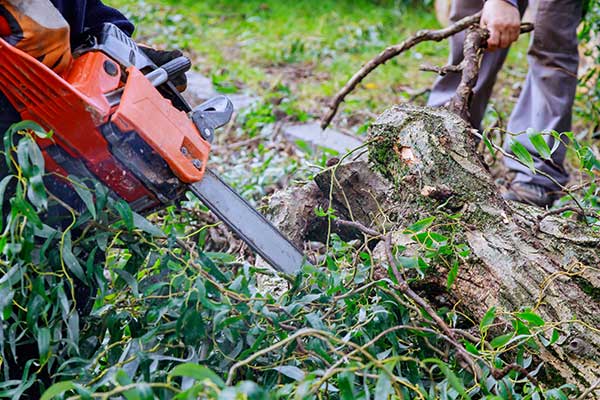
Brush on a Bulverde tract is not a cosmetic problem. It takes the pasture you were going to put horses on, closes the fence line you need to inspect, stacks fuel against the house, and fills the space where the arena or the barn was supposed to go. Hill Country Land Clearing removes brush across Bulverde, Spring Branch, and the surrounding Comal County acreage at whatever scale the property needs.
Ashe juniper dominates. Left alone it spreads out of the draws and takes open ground within a couple of decades, and once a stand closes canopy almost nothing grows underneath it. Behind it come persimmon, agarita, and whitebrush, with mesquite on the lower and more open ground toward the east. Prickly pear and tasajillo fill the gaps and make ground unusable for livestock. Cedar has one helpful trait, which is that cut below the lowest green growth it does not resprout. Mesquite and persimmon are the opposite and come back multi stemmed from the root crown.
A lot of Bulverde acreage ends up carrying horses or a few head of livestock, and brush work on those properties has requirements that ornamental clearing does not. Sharp stobs left at ankle height are a genuine injury risk in a paddock, so cut height and cleanup standards matter. Prickly pear and tasajillo have to be removed rather than shredded and scattered, because the pieces root and the spines end up in hooves and legs. Old wire hidden in brush is the other hazard we look for specifically. Tell us the tract is going to carry animals and we will finish it accordingly.
Every December through February this corridor turns into one of the worst allergy environments in the country, and we get calls asking whether clearing cedar will help. The honest answer is partly. Male Ashe juniper releases pollen that travels for miles, so removing trees from your acreage will not remove your exposure. What it does reduce is the concentration right around your house and yard, which many people notice. If your primary goal is fewer symptoms, treat it as one useful step rather than a cure.
The 281 corridor is wildland urban interface, and cedar is one of the most volatile fuels in Texas. On tracts where houses sit a few hundred feet apart with continuous brush between them, one property’s fuel load is everyone’s problem. Clearing brush back from structures, breaking up continuous fuel, and widening the driveway so a fire truck can get in and turn around are all straightforward work with an enormous return in a bad year.
Subdivided acreage means shared fence lines and neighbors who can hear everything. Before cutting along a boundary we confirm which side is yours and what is rooted where, since anything growing on their side is theirs to decide about. We let adjacent owners know when noisy work is happening and keep material from being pushed over a line. On tracts inside an association, we also work within whatever the restrictions allow rather than around them.
Small areas and tight spots get a skid steer with a cutter or mulching head. Larger acreage gets bigger tracked machines that can hold production across a full day. An excavator with a grapple comes out when root crowns have to be pulled, when brush is tangled with old net wire and t posts, or when material needs stacking. On slope the machine choice becomes a safety decision rather than just a productivity one.
Tracts that have sat unmanaged since they were subdivided usually hold more than plants. Old net wire and barbed wire swallowed by regrowth, t posts, abandoned pens, dumped appliances and building material, and occasionally a well casing or a survey pin nobody has seen in decades. Metal will wreck a mulching head and buried infrastructure is much better found by a person than by a machine. We walk the ground first, flag what is there, and price debris handling for it instead of absorbing a surprise mid job.
The first pass on a tract that has been left alone for twenty years is always the expensive one, because the stems have gone from cuttable to needing serious horsepower and the volume is high. Everything after that costs a fraction. Owners who bring us back every couple of years never watch the thicket return and never pay for a full reclaim twice. On Hill Country acreage it is the single most cost effective habit you can build.
Brush removal across Bulverde, Spring Branch, Canyon Lake, Smithson Valley, Garden Ridge, Timberwood Park, Bracken, Fair Oaks Ranch, New Braunfels, and throughout Comal, Kendall, and northern Bexar counties.
Tell us the acreage, the access, and whether animals will be on the ground afterward. Call 210-942-1961.
Partly. Male Ashe juniper pollen travels for miles, so removing trees on your acreage does not remove your exposure during the December to February season. What it does reduce is the concentration immediately around your house and yard, which many people report noticing. Treat it as one useful step rather than a solution to the allergy itself.
Yes, and it should be. Cut height matters because sharp stobs at ankle level are an injury risk in a paddock. Prickly pear and tasajillo have to be removed rather than shredded, since scattered pieces root and the spines end up in hooves. Old wire hidden in brush gets pulled out specifically. Tell us animals are going on the ground and we finish it to that standard.
More than most owners estimate from the road. A closed juniper canopy shades out grass almost completely and intercepts rainfall in the foliage before it reaches the ground. Tracts that look forty percent usable frequently turn out far more productive once the cedar is off, though grass recovery depends on whether a seed bank survived in the soil.
Cedar cut below its lowest green growth does not resprout and returns only from new seed. Mesquite, persimmon, huisache, and whitebrush all resprout from the root crown and come back with multiple stems unless the crown is removed or treated. Prickly pear spreads from any dropped pad. Your species mix determines whether one pass will hold or whether you need a cycle.
Yes. Mulching and cutting leave the soil and root mat intact, and the chip layer protects the ground while grass recovers. Most Comal County pasture responds well once the cedar stops shading it and competing for water. Blade clearing is what strips grass and topsoil, and on this thin soil we avoid it unless the job specifically requires bare ground.
Often yes on subdivided tracts around Bulverde. Recorded restrictions commonly cap clearing percentages, protect specified trees, and prohibit burning, and many properties have an association that reviews the work. This is separate from anything the city or county requires. Check your documents first, since restrictions are enforceable whether or not the county regulates the activity.
Most tracts here hold two to four years after the initial clearing before a light maintenance pass is worthwhile, depending on rainfall and species mix. Keeping a property on a cycle is dramatically cheaper than letting it close back in, because machines move through young regrowth far faster than through mature stems.