
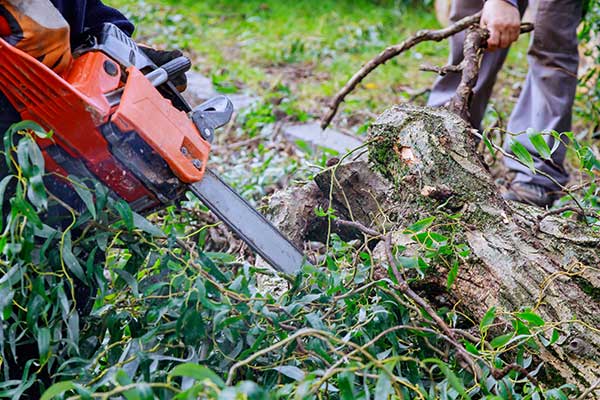
On a retail corridor, overgrown vegetation is not an appearance problem, it is a revenue problem. A monument sign nobody can read from the road, a storefront hidden behind volunteer hackberry, an entrance drive that looks closed because the brush has grown over it. Hill Country Land Clearing clears commercial and residential brush across Selma, and on the commercial side visibility is usually the whole point.
Vegetation grows faster than most tenants notice, and by the time somebody complains that traffic is down, the monument sign has been half obscured for two seasons. Clearing sight lines back from an entrance, opening the view of a storefront from the road, and keeping the approach visible are all cheap relative to what a retail tenant pays for that frontage in the first place. If you manage a centre, this is worth a scheduled interval rather than a reaction to a complaint.
There is a safety dimension alongside the commercial one. Brush grown up at a driveway or an intersection blocks a driver’s view of oncoming traffic and of pedestrians, and on a corridor with this much turning movement that matters. Clearing the visibility triangle at an entrance is straightforward work with real value, and it is one of the first things worth doing on a property that has been left unattended.
Many commercial sites here carry required landscape buffers or screening between the development and adjacent residential property. The purpose is screening, so the intent is not to clear those strips out. What they do need is management: removing volunteer hackberry, chinaberry, and tallow that crowd out and eventually kill the planted screening, taking out deadwood, and keeping the strip from becoming a dumping ground. Done properly, buffer maintenance preserves the screen rather than removing it, which is what the requirement and the neighbours both want.
Away from the corridor the work is ordinary and familiar: rear sections that have filled in with hackberry and tallow, fence line strips growing through the fence, side yards too narrow to mow, and yards on properties between tenants or preparing for sale. Material is hauled out rather than left, the truck is staged so it does not block the street, and the work area is cleaned before we leave.
Hackberry, chinaberry, ligustrum, Chinese tallow, mesquite, and huisache all come back from the root crown, so cutting alone buys a season. On commercial ground where appearance is the point, that is worth knowing before you sign, because a cheap pass that regrows by spring costs more than a proper job. The deep soil here means crowns can be grubbed cleanly where a feature needs to stay clear long term.
On an operating property we plan the work around the business rather than the other way around. Early starts, avoiding delivery windows, keeping drive aisles open, and pulling equipment back before peak hours are all normal. Blowing debris across a parking lot full of cars, or leaving a lane blocked over a lunch rush, causes more damage to a relationship than the clearing was worth.
Rear areas and perimeter strips on commercial property collect more than vegetation. Dumped material, abandoned pallets and signage, old fencing, shopping carts, and occasionally a valve box or cleanout nobody has seen in years. Metal and debris are why we do not run equipment blind into dense growth. We clear by hand into it first, separate what is not vegetation, and price that handling honestly rather than treating it as a surprise.
For a commercial property, the first clearing after several years of neglect is always the expensive one. Everything after that costs a fraction. A scheduled interval keeps sight lines open, buffers healthy, and easements accessible without anyone having to notice a problem first, and it is far easier to budget than a reclaim every few years plus the complaints that trigger it.
Brush removal across Selma, Schertz, Cibolo, Live Oak, Universal City, Converse, Garden Ridge, Kirby, Windcrest, and throughout Bexar, Comal, and Guadalupe counties.
Send the address, and for commercial work tell us what hours matter. Call 210-942-1961.
Yes, and it is one of the more common commercial jobs here. Vegetation grows faster than tenants notice, and a monument sign can be half obscured for a couple of seasons before anyone connects it to slower traffic. Clearing sight lines back from the entrance and the road is inexpensive relative to what the frontage costs to lease.
No, and that is the point of it. Buffers exist to screen a commercial use from adjacent residential property. What they need is management rather than removal: taking out volunteer hackberry, chinaberry, and tallow that crowd and eventually kill the planted screening, removing deadwood, and keeping the strip from becoming a dumping ground.
That is standard on an operating property. Early starts, avoiding delivery windows, keeping drive aisles open, and pulling equipment back before peak hours are all normal practice. Tell us which hours matter and we schedule around them. Leaving a lane blocked over a lunch rush costs more goodwill than the job is worth.
Worth clearing for safety as much as for appearance. Brush at a driveway blocks a driver's view of oncoming traffic and of pedestrians, and on a corridor with this much turning movement that matters. It is straightforward work and usually one of the first things worth doing on a property that has been left unattended.
Some of it. Hackberry, chinaberry, ligustrum, tallow, mesquite, and huisache all resprout from the root crown, so cutting alone buys a season. On commercial ground where appearance is the whole point, a cheap pass that regrows by spring costs more than doing it properly. Deep soil here lets crowns be grubbed where a feature must stay clear.
Yes, and for commercial properties it is usually the better arrangement. A scheduled interval keeps sight lines open, buffers healthy, and easements accessible without anyone having to notice a problem first. It is also easier to budget than a reclaim every few years, and it avoids the complaints that trigger reactive work.
Only up to your property line. Vegetation on public right of way belongs to the controlling agency and cannot be altered by an adjacent owner without authorization. The boundary is often further onto the parcel than people assume, so we confirm the line before working near a frontage rather than assuming it follows the fence or the pavement.