
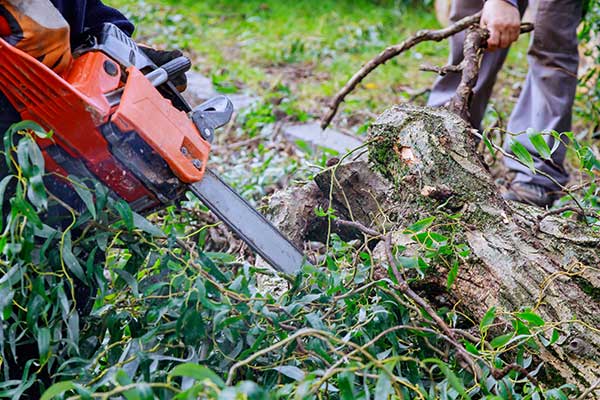
There is a specific problem that comes with owning a wooded acre in a city, and most people here have run into it. The lot is too large to hand maintain and too wooded to mow, but it is also too small, too regulated, and too close to neighbours for the kind of ranch equipment that would normally handle brush at this scale. So it gets left, and cedar fills in. Hill Country Land Clearing works exactly this gap.
Ashe juniper regenerates from seed across all of northern Bexar County, and a wooded lot that was open beneath the oaks fifteen years ago closes in without anyone deciding to allow it. It grows in the understory where nothing gets mowed, it tolerates the shade, and unlike almost everything else on the property it is not something a landscaping crew is set up to deal with at this scale. By the time an owner calls, there is usually a solid wall across the back half of the lot.
Cedar dominates, with persimmon, agarita, whitebrush, and greenbriar underneath and prickly pear on the more open ground. Cedar has one useful characteristic: cut below its lowest green growth it does not resprout from the stump, so it stays down and returns from seed over years rather than regrowing within a season. The others come back from the root crown, which means a lot with a mixed population needs a mixed approach rather than one blanket treatment.
It is easy to assume fire is a rural concern, but a wooded acre lot with continuous cedar running from the boundary up to the house is the same fuel arrangement whether it sits in Bandera County or inside Loop 1604. Clearing brush back from the house, the garage, and any outbuildings, and breaking up continuous fuel across the lot, is worthwhile work. So is keeping a long private driveway wide enough and clear enough overhead for a fire truck to get in and turn around.
This area carries a heavy deer population and it shapes the vegetation more than most owners realise. Deer browse everything palatable within reach, which is why the lower canopy often looks trimmed to a line while the understory above it stays thick, and why cedar, which they largely avoid, keeps gaining ground on species they prefer. If you plan to plant anything after clearing, choose accordingly or plan on protecting it, because otherwise the deer will make the selection for you.
Lots here are large but boundaries still matter and everyone can hear everything. Before cutting along a line we confirm which side is yours and what is rooted where, since anything on the neighbour’s side is theirs to decide about. We let adjacent owners know when noisy work is happening and keep material from crossing a line. On properties backing onto undeveloped ground we confirm where your ownership actually ends before anything is cut.
It is easy to assume tree rules only cover mature specimens, but the code here may capture stems larger than you expect depending on species and size. Selective brush and understory work usually sits comfortably inside the requirements since the canopy is untouched, but it is worth confirming before scheduling rather than assuming brush is unregulated because it is not a big tree.
Sections of a lot left alone since the property was developed hold more than juniper. Old fencing swallowed by regrowth, dumped landscape material, abandoned irrigation, deadfall stacked by nobody in particular, and occasionally a cleanout, valve box, or septic component nobody has seen in years. Metal is what damages a mulching head. We work by hand into dense material first, separate what is not vegetation, and price that handling rather than absorbing a surprise partway through.
The first clearing on a lot that has closed in over fifteen years is the expensive one, because the cedar has gone from cuttable to needing real horsepower and the volume is high. Everything after that costs a fraction. Owners who bring us back on a light cycle every couple of years never watch the back of the property disappear again and never pay for a full reclaim twice.
Brush removal across Shavano Park, Hollywood Park, Hill Country Village, Castle Hills, Helotes, Leon Springs, Cross Mountain, Fair Oaks Ranch, Stone Oak, and neighbouring San Antonio areas.
Photos of the house, the driveway, and the back of the lot are the most useful thing to send. Call 210-942-1961.
Because a wooded acre is the awkward middle. It is too large to hand maintain and too wooded to mow, but too small, too regulated, and too close to neighbours for ranch equipment. Landscaping crews are not set up for cedar at this scale, and acreage contractors are not set up for the constraints. That gap is exactly what we work in.
It regenerates from seed and the seed source across northern Bexar County is substantial regardless of what you do on your own lot. Cut below its lowest green growth it does not resprout from the stump, which helps a great deal, but new seedlings keep establishing. That makes it a maintenance cycle, though a much slower one after the first clearing.
A wooded acre lot with continuous cedar running from the boundary up to the house is the same fuel arrangement whether it is rural or inside Loop 1604. Clearing back from the structure and breaking up continuous fuel is worthwhile, and so is keeping a long private driveway clear enough for a fire truck to get in and turn around.
They may, since the code can capture stems larger than owners expect depending on species and size. Selective brush and understory work usually sits comfortably within the requirements because the canopy is untouched, but confirm before scheduling rather than assuming brush is unregulated simply because it is not a mature tree.
Whatever the deer will not eat, largely. Heavy browse pressure here shapes regrowth substantially, and cedar is unpalatable to them, which is part of why it keeps gaining. Native grasses and forbs return where light reaches soil and browse allows. If you plan to plant after clearing, choose accordingly or plan on protecting what you put in.
Revisit the area around the house every year or two and the wider lot every two to four years. Cedar returns from seed rather than stumps, so the rate drops noticeably after the first clearing. Properties kept on a cycle cost a fraction of what it takes to reclaim one that has been left to close back in completely.
Yes, up to your line. Before cutting we confirm which side is yours and what is rooted where, since anything on the neighbour's side is theirs to decide about. Where a property backs onto undeveloped ground we establish the boundary before anything is cut rather than assuming an old fence marks it accurately.