
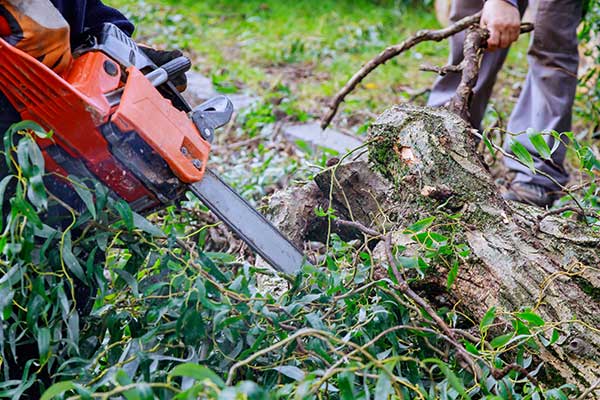
Out here brush is not a tidiness question. It takes pasture, it closes fence lines, it stacks fuel against a house that is a long way from a fire station, and on properties running on a well and a storage tank it is competing with you for the water you actually drink. Hill Country Land Clearing removes brush across Spring Branch and the surrounding Comal County acreage.
Most households here are on a well into the Trinity, often with storage tanks and sometimes with rainwater catchment as well, and in a dry year that arrangement gets tight enough that people haul water. Ashe juniper is the thirstiest thing on most tracts and a dense stand intercepts rainfall in the foliage before it ever reaches the ground. Whether thinning it measurably improves what reaches the aquifer is a longer argument with mixed evidence, but what owners here consistently report after clearing is grass returning, draws holding moisture longer, and seeps that had gone quiet coming back. On a property where your water is your own problem, that is worth something regardless of how the science settles.
There is a more immediate version of the same point. Brush grown up around a wellhead, a pressure tank, a storage tank, or a catchment system makes maintenance awkward and hides problems until they become failures. On catchment setups, cedar overhanging a roof means debris in the gutters and in the first flush every time the wind blows. Clearing back around your water infrastructure is a small job with a return every time something needs looking at.
Ashe juniper dominates, spreading out of the draws and taking open ground within a couple of decades. Persimmon, agarita, and whitebrush fill in underneath, with prickly pear and tasajillo on the grazed ground and mesquite on the lower elevations. Cedar has one genuinely useful trait: cut below its lowest green growth it does not resprout. The others come back from the root crown, so a tract with a mixed population needs a mixed approach rather than one blanket treatment.
This is wildland urban interface with long response times. Cedar is one of the most volatile fuels in Texas and here it forms continuous cover running up slopes toward houses that may be several miles from the nearest station. Clearing brush back from the house, the barn, and the propane tank, breaking up continuous fuel, and widening the ranch road so apparatus can get in and turn around are all worth doing. On remote property, defensible space is not a supplement to the fire department, for the first while it is the fire department.
On the deeper pockets of soil, crowns can be grubbed and control is lasting. Where the limestone is shallow, that is not available and the honest answer is cutting cedar below the green and accepting that the resprouting species will need revisiting. We tell you which parts of a tract fall into which category rather than quoting one approach across a property that has both.
Tracts unmanaged for decades hold more than plants. Old net wire and barbed wire swallowed by regrowth, t posts, abandoned corrals and pens, dumped appliances, and occasionally a well casing, a cistern, or a survey pin nobody has seen in thirty years. Metal will damage a mulching head and buried infrastructure is far better found by a person on foot. We walk the ground first, flag what is there, and price debris handling rather than absorbing a surprise mid job.
The first pass on a property left alone for twenty years is always the expensive one, because stems have gone from cuttable to needing serious horsepower and the volume is enormous. Everything after that costs a fraction. Owners who bring us back every couple of years never see the thicket return, never watch the fuel load rebuild against the house, and never pay for a full reclaim twice.
Brush removal across Spring Branch, Bulverde, Canyon Lake, Startzville, Fischer, Blanco, Wimberley, Boerne, Comfort, New Braunfels, and throughout Comal, Kendall, Blanco, and Hays counties.
Tell us the acreage, the road access, and where your water infrastructure sits. Call 210-942-1961.
Honestly, the evidence on aquifer recharge is mixed and we will not promise you more water in the well. What owners here consistently report after thinning is grass returning, draws holding moisture longer, and seeps that had gone quiet coming back. On a property where water is your own responsibility, that is worth doing on its own merits.
Yes, and it is a small job with a real return. Brush around a wellhead, pressure tank, or storage tank makes maintenance awkward and hides problems until they become failures. On rainwater catchment, cedar overhanging the roof puts debris in the gutters and the first flush every time the wind blows.
More than most owners estimate from the road. A closed juniper canopy shades out grass almost entirely and intercepts rainfall in the foliage before it reaches the ground. Tracts that looked forty percent usable often turn out far more productive once the cedar is off, though recovery depends on whether a grass seed bank survives in the soil.
It regenerates from seed and the seed source across this area is substantial regardless of what happens on your own tract. Cut below its lowest green growth it does not resprout from the stump, which helps considerably, but new seedlings keep establishing. That makes it a maintenance cycle, though a much slower one after the first clearing.
More than you would in town, because response times out here are long. Brush and cedar pulled well back from the structure, nothing flammable stacked against walls or under decks, continuous fuel broken up across the approach, and the ranch road wide enough for apparatus to get in and turn around. For the first while, that clearing is your fire protection.
Yes. Mulching and cutting leave the soil and root mat intact, and the chip layer protects the ground while grass recovers. Most rangeland here responds well once cedar stops shading it and taking the water. Blade clearing is what strips grass and thin topsoil, and on this ground we avoid it unless a project genuinely requires bare dirt.
Two to four years for a light maintenance pass on most tracts, longer where the initial clearing was thorough. Cedar returns from seed rather than stumps, so the rate drops noticeably after the first pass. Keeping a property on a cycle costs a fraction of reclaiming one that has been allowed to close back in over a decade.