
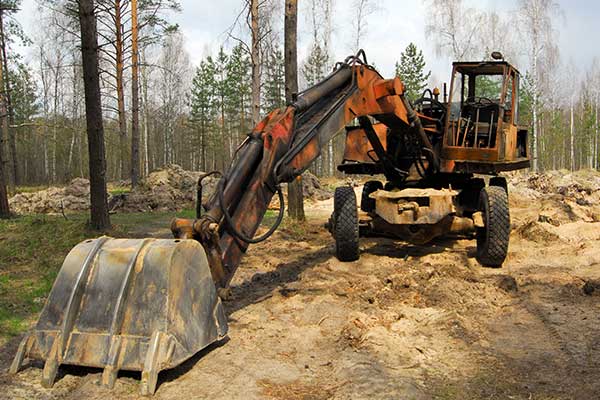
Shavano Park is an unusual place to work and the reason is the lot size. This is a city of wooded acre and larger properties, sitting inside Loop 1604 and surrounded entirely by San Antonio. That means you get Hill Country vegetation problems, cedar and limestone and all of it, on a property with neighbours a hundred feet away and a city ordinance over the whole thing. Hill Country Land Clearing works these lots regularly.
It is worth saying plainly, because it explains the rules. The wooded, low density character here is not an accident of development, it is the point of the place and the reason it incorporated separately. Shavano Park regulates tree removal through its own code and takes it seriously, with thresholds that differ from unincorporated Bexar County and from San Antonio. Confirm current requirements with the City of Shavano Park before scheduling, and understand that approval belongs to the property owner. We will not take down a protected tree that has not been cleared.
Almost nobody here wants their property cleared. What they want is a specific area opened up: a pool and outdoor living footprint, a casita or shop pad, a driveway corridor or turnaround, or the back third of the lot that has gone entirely to cedar and become unusable. We clear those areas properly, grub stumps where a structure is going, and leave everything outside the line alone. Keepers are marked with you before a machine moves.
Soil depth varies across the city and rock is frequently close to the surface. Where there is depth, stumps grub cleanly. Where the shelf sits shallow, pulling a stump can mean tearing into rock and leaving a hole that does not backfill neatly. Inside a structural footprint the roots come out regardless and we deal with what we find. Outside of that, grinding below grade is usually the better result, and we would rather explain that at the walkthrough than have you discover it when the machine stops.
Some properties in this area are served by on site sewage rather than city sewer, and on a large wooded lot the field is not always where the owner assumes. Before excavating anything we want to know where the system, the tanks, and the field sit, along with irrigation, propane runs, and any earlier work on the property. Driving a machine across a drain field or trenching through a line is an expensive way to find out where it was.
Compared with the older enclaves closer to town, Shavano Park gives us room. Driveways are long, gates are usually wide, and there is space to unload. What still governs is overhead clearance under mature canopy along the approach, whether the driveway will carry a lowboy, and whether the working area is reachable without crossing root zones we are trying to protect. We check the actual route before quoting rather than assuming the lot size means easy access.
Burning is not appropriate in a residential city. Around the house and in areas you use daily, material is hauled off. In the back sections of a wooded lot, mulching in place is often the better call, since the chip layer suits the setting and avoids a long series of truck trips down a private drive. Most properties here end up using both methods in different areas, split along the line where usable yard ends.
On a wooded acre there is a good argument for opening it gradually rather than all at once. Clear the area you most want back, live with it through a season, and see how the property behaves. You will learn where water runs after a heavy rain, how much light actually reaches the ground once the cedar is out, and which trees you are glad you kept. Owners who open a whole lot in one week are the ones most likely to tell us afterward that they wish they had left more.
Clearing is usually the first step rather than the whole project. A pool builder, a landscape contractor, or a builder is generally behind us, and order matters, particularly where tree protection has to stay up throughout. Some vegetation should come out before excavation so machines have room, and some is better left until after so it is not damaged by construction traffic. We coordinate that rather than clearing to a line and leaving.
We work throughout Shavano Park and the surrounding area, including Hollywood Park, Hill Country Village, Castle Hills, Helotes, Leon Springs, Cross Mountain, Fair Oaks Ranch, Stone Oak, and the neighbouring San Antonio areas along NW Military Highway and Huebner Road.
Send the address, photos of the area, and any tree or restriction questions you already have. Call 210-942-1961.
For trees, very likely. Shavano Park regulates tree removal through its own code and takes it seriously, with thresholds differing from unincorporated Bexar County and from San Antonio. Confirm current requirements with the city before scheduling. Approval is the property owner's responsibility, and we will not take down a protected tree that has not been cleared.
Almost never, and we would generally advise against it. What owners actually want is a defined area opened up: a pool footprint, a casita pad, a driveway corridor, or the back section that has gone to cedar. The wooded character is why most people bought here, and clearing a lot to bare ground works against both the property value and the ordinance.
Inside a structural footprint they come out regardless of what the rock presents. Elsewhere, grinding below grade is usually better, because grubbing where limestone is shallow can mean tearing into rock and leaving a hole that does not backfill cleanly. We tell you which situation applies on your property during the walkthrough rather than afterward.
Tell us where it is before we start. Some properties in this area are on on site sewage rather than city sewer, and on a large wooded lot the field is often not where the owner assumes. Driving a machine across a drain field or trenching through a line is an expensive way to establish its location, so we want that mapped first.
Usually, since driveways here are long and gates are generally wide. What we confirm first is overhead clearance under the canopy along the approach, whether the drive will carry a lowboy, and whether the working area can be reached without crossing root zones we are protecting. Lot size does not automatically mean easy access.
Around the house it is hauled off, since burning is not appropriate in a residential city. In the back sections of a wooded lot, mulching in place is usually preferable because the chip suits the setting and avoids repeated truck trips down a private drive. Most properties use both methods in different areas.
It is quoted by the job rather than per acre, since the work is defined areas rather than whole properties. Drivers are the size of the area, material size, rock, how much stump work is genuinely required, machine access, and disposal method. We separate grubbing from grinding so you can match the work to what the project actually needs.