
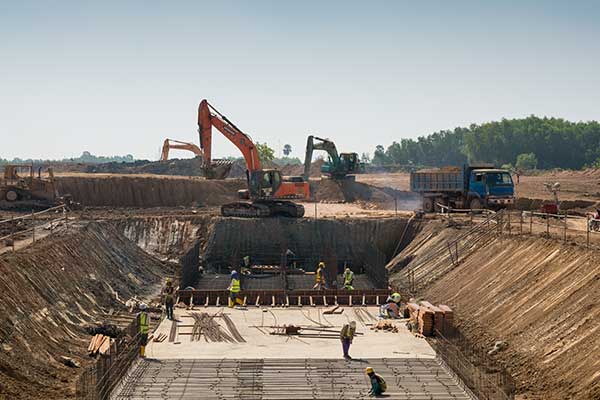
Building on Bulverde acreage means solving problems a subdivision lot never presents. There is no driveway yet. The pad site is on a slope with a few inches of soil over limestone. Utilities may be several hundred feet away. The septic field has to go somewhere that works, and a barn, a shop, or an arena is probably going in later. Hill Country Land Clearing prepares homesites and building sites throughout Bulverde and Comal County.
Shallow limestone is the defining condition of site work here and it cuts both ways. Excavating it is slow and can require ripping or hammering rather than digging, which is a real line on a sloped pad. But compacted properly, the material you take out is excellent driveway base, so rock that costs money to remove offsets material you would otherwise import. This is a large part of why we walk a Bulverde site before quoting rather than pricing from a plan set.
A lot of Comal County acreage ends up with more than a house on it, and those pads have their own requirements. A barn pad needs the same organic removal and compaction a house pad does, since anything left to rot underneath becomes a settlement problem. An arena needs a properly prepared and drained base or the footing never behaves, and it needs to sit where water is not going to run through it. Getting these located and built while equipment is already mobilized is far cheaper than bringing it back in two years.
On site sewage in Comal County has to work with thin soil over rock, which affects both system type and placement. The field location has to be settled before pad grading rather than after, because you cannot run construction traffic across a future drain field and you cannot place fill over an area the design depends on. Same goes for the well and its access. We build to the layout your designer and the county specify and keep equipment off those areas from the first day.
A pad nobody can reach is not progress, so on rural tracts access usually gets built first. We clear the corridor, cut subgrade, install culverts where a draw crosses the route, and place and compact base so concrete trucks and deliveries can make it in. Grade is the constraint, and a route that looks direct on the plat often has to be lengthened to keep slope drivable when it is wet. Where the driveway meets a county road, the approach has its own requirements worth confirming early.
Hill Country rainfall arrives hard and thin soil over rock absorbs very little of it. Grading that ignores water is the most expensive available mistake. We set positive fall away from every building footprint, shape swales that route runoff to a controlled outlet instead of down the new driveway, and size crossings for what they actually receive. On subdivided acreage there is a second reason to get it right, which is that water pushed onto a neighbor becomes a dispute rather than a drainage issue.
Whether your tract is inside Bulverde city limits, in the extraterritorial jurisdiction, or in unincorporated Comal County changes what applies. The county handles on site sewage, platting, and floodplain matters, and your recorded restrictions and association may add requirements on siting, driveway materials, and clearing limits. The owner or builder holds these approvals. We work within them and schedule around the timelines.
Service to a rural homesite is rarely close. Electrical runs of several hundred feet, water lines from a well that may sit well away from the house, and the trenching or boring to connect them all need routing before the pad is finished. Rock makes trenching expensive, so route selection genuinely matters here. Where a line would otherwise cut through a live oak root zone you are trying to protect, boring under or routing around is worth the extra footage.
Good rural site prep tries to balance cut and fill on the property so you are not paying to import dirt and export spoil at the same time. Topsoil stripped from the building envelope gets stockpiled and reused at final grade rather than hauled off and bought back later. Excavated limestone often crushes into usable driveway base. On rocky Bulverde sites that can offset a real share of the material cost, which is another reason we quote from the ground rather than from a plan.
Site preparation across Bulverde, Spring Branch, Canyon Lake, Smithson Valley, Garden Ridge, Timberwood Park, Fair Oaks Ranch, New Braunfels, and throughout Comal, Kendall, and northern Bexar counties.
Send the plan, or just the address and what is going in. Call 210-942-1961 to schedule a walkthrough.
It is the largest single variable on most Bulverde pads and it depends on depth and hardness. Material that can be ripped is far cheaper to move than material requiring a hammer. The offset is that excavated limestone, processed and compacted, makes excellent driveway base, so some of the excavation cost returns as material you do not have to buy and truck in.
Yes, and it is worth doing while equipment is already on site. A barn pad gets the same organic removal and compaction a house pad does. An arena needs a properly built and drained base, positioned where water is not running through it, or the footing will never perform regardless of what you put on top. Both are far cheaper built alongside the house pad than separately later.
First. The design and location come from your on site sewage facility designer under Comal County requirements, and it has to be settled before grading begins. Construction traffic across a future drain field compacts it and fill placed over it undermines the design. We keep equipment off the area from day one once the layout is known.
Usually before anything else, since the pad is not much use without access. We clear the corridor, cut subgrade, set culverts where a draw crosses, and place and compact base. Grade governs the design, and the approach where the driveway meets a county road has its own requirements that are worth confirming early rather than after it is built.
Texas counties do not zone the way cities do, but Comal County does regulate on site sewage, platting, and floodplain development, and those can all apply. If your tract is inside Bulverde city limits or the ETJ, different rules attach. Recorded restrictions and an association may add more. The owner or builder holds all of these approvals.
Yes, generally by benching into the hillside rather than filling out from it wherever the site allows, since cut is more stable than fill on this ground. The design comes from your engineer. What we contribute is knowing where the rock is, how water crosses that particular slope, and where retained edges need protection from runoff during construction.
A straightforward pad on an accessible tract can be a matter of days. A site needing a new driveway, culverts, significant rock excavation, and utility corridors can run several weeks. Weather and approval timing cause most of the slip. We provide a schedule with the quote and update it when field conditions differ from what the plan assumed.