
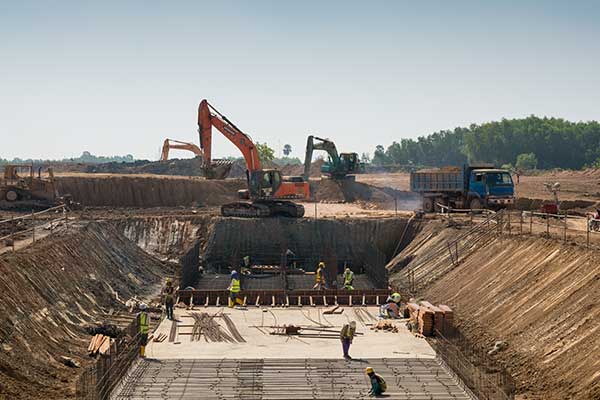
Site preparation in Cibolo is a soil problem before it is anything else. The ground here is deep expansive clay, and it moves. It swells when wet, shrinks when dry, and does so with enough force to crack a slab that was not prepared for it. Every serious decision on a Guadalupe County site traces back to that, and getting it right is the difference between a foundation that lasts and one that becomes a lawsuit.
Blackland Prairie clay has high shrink swell potential. Through a normal Texas year it takes on water in spring, then loses it through a hot dry summer, and the soil volume changes measurably in the process. A slab placed on untreated clay rides that movement. The remedies come from your geotechnical report and your engineer, and can involve select fill, moisture conditioning, over excavation and replacement, or a foundation design that accommodates movement. We build to that specification and we do not shortcut it, because this is the one thing on a Cibolo site you cannot fix afterward.
The good news about this soil is that grubbing actually works. There is no rock shelf, so root balls come out whole and the footprint can be genuinely cleaned. That matters because organic material left under a pad decomposes, creates a void, and produces settlement that shows up as a crack two years after occupancy. On a clay site already prone to movement, adding an avoidable settlement source is the last thing you want.
People assume flat sites are easy. They are not. On gently sloping clay, water does not run off, it sits, and clay absorbs very little of it. Positive fall away from every structure has to be created deliberately, swales have to actually reach an outlet rather than dying in the middle of a lot, and low spots become standing water and then a mosquito and foundation problem. Detention requirements on development sites add another layer. We shape drainage as a design element, not as a finishing touch.
Cibolo Creek and its tributaries carry mapped floodplain through this area, and on flat ground the extent is wider than most people assume. If your site is in or near it, that has to be established before design, since floodplain development carries requirements and may limit fill, finished floor elevation, and what can be built at all. Check FEMA mapping and confirm with the City of Cibolo or Guadalupe County depending on where the site sits.
You cannot compact wet clay properly and you cannot run equipment on saturated ground without leaving damage. That means real weather risk in the schedule, more than on a rocky Hill Country site that sheds water and dries quickly. We build float into the program, tell you honestly when conditions are not workable, and would rather lose three days than place fill at the wrong moisture content and have it fail compaction testing.
Whether your site is inside Cibolo city limits, in the ETJ, or in unincorporated Guadalupe County changes what applies. The city regulates development within its limits and has requirements for grading, drainage, and trees. The county and floodplain administration cover other aspects. The owner or general contractor holds the permits. We work within them and schedule around approval timelines rather than assuming they will resolve.
Blackland topsoil is genuinely good material and it is worth stripping and stockpiling rather than mixing it into fill or hauling it off. Reused at final grade it gives landscaping and turf a far better start than imported material, and it costs nothing beyond the handling. On sites where the pad footprint is a small part of the property, stockpiling the strip is one of the easier savings available.
A construction entrance on this soil needs proper base or it becomes a mud channel that tracks material onto the public road and draws attention from whoever is enforcing it. Base material has to be imported since there is no rock to excavate locally, which is the reverse of a Hill Country site where the excavation supplies the driveway. We plan and price that as its own item, because it is a real cost that catches out owners who have built west of here.
Site preparation across Cibolo, Schertz, Universal City, Selma, Live Oak, Converse, Marion, Santa Clara, Seguin, New Braunfels, and throughout Guadalupe, Comal, and northeastern Bexar counties.
Send the plans and the geotechnical report if you have one. Call 210-942-1961.
To the specification in your geotechnical report, which is not optional on this soil. Depending on the recommendation that can mean select fill, moisture conditioning, over excavation and replacement, or a foundation designed to tolerate movement. What we will not do is place a slab on untreated clay, because the shrink swell cycle here is strong enough to crack it and it cannot be fixed afterward.
For anything structural on this soil, it is money well spent and often required. Blackland Prairie clay varies in depth and plasticity across short distances, and the report tells your engineer what treatment the specific site needs. Building without one on expansive clay means guessing at the single variable most likely to cause a problem.
Because water does not leave on its own and clay absorbs very little of it. Fall has to be created deliberately, swales have to actually reach an outlet instead of dying in the middle of the site, and low spots become standing water. Flat sites take more drainage design work than sloped ones, not less, which surprises a lot of owners.
Check the FEMA mapping and confirm with the City of Cibolo or Guadalupe County. Cibolo Creek and its tributaries carry mapped floodplain through this area and on flat terrain it extends further than people expect. Establish this before design, since floodplain requirements can affect fill, finished floor elevation, and whether a project is viable as drawn.
More than on rocky ground. Clay cannot be compacted properly when wet and equipment on saturated ground leaves damage, so wet stretches genuinely stop work rather than slowing it. We build float into the schedule and tell you when conditions are unworkable. Placing fill at the wrong moisture content to save three days fails compaction testing and costs more.
Yes, and here it is fully achievable because there is no rock shelf to fight. Root balls come out whole. That matters on a clay site, since organic material left underground decomposes into a void and produces settlement, and adding an avoidable settlement source to soil that already moves seasonally is asking for a foundation problem.
It depends on whether the site is inside city limits, in the extraterritorial jurisdiction, or in unincorporated Guadalupe County. The city regulates development within its limits including grading, drainage, and trees. Floodplain administration adds requirements where applicable. The owner or general contractor holds the permits and we work within them.