
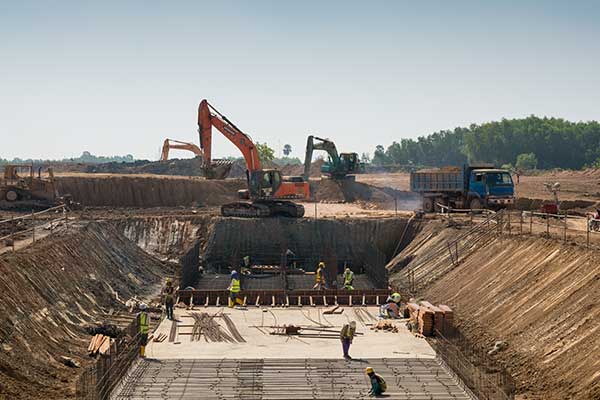
Site preparation in Converse is mostly small footprint work with real consequences. A shed or shop pad, a pool, a patio extension, an addition. On a small lot with clay soil and a house already sitting nearby, doing that badly causes problems you will be living with. Hill Country Land Clearing prepares these sites across Converse, and homesites on the acreage east of town.
This is the Converse specific issue. A great many lots in the newer subdivisions were graded and filled during development, and the ground in your back yard may be imported material rather than native soil. Fill placed to establish lot grades is not necessarily engineered to carry a structure, and it can include construction debris buried during the build. Before we put a pad on it we find out what is actually there, because a slab on poorly compacted fill settles and cracks, and by then it is your problem rather than the builder’s.
On a small lot everything happens near the foundation, and that requires care. Excavating too close to a slab can undermine it. Changing grade against the house can direct water where it was previously running away. Digging blind risks the sewer lateral, the water line, the gas line to the grill, and irrigation. We get utilities located, ask what you know about past work, and keep excavation and new grade at a safe relationship to the existing foundation.
Flat sites do not drain themselves. Water sits, clay absorbs very little of it, and the low spot becomes standing water that kills grass and works against your foundation. Any new structure or paving in a back yard changes how water crosses the lot. We establish fall away from the house and the new pad, shape the yard so runoff reaches an actual outlet rather than dying halfway, and make sure the fix does not simply move your water over the fence, which on lots this close together turns a drainage detail into a neighbor problem.
A pad is not just a level patch. Organic material and roots come out entirely, since anything left to decompose becomes a void and then a settlement crack. Fill goes in compacted lifts rather than being dumped and spread. The pad extends past the structure footprint so the edges do not slough, and it is shaped so water leaves rather than standing against the slab. A shop pad gets built to the same standard as a house pad, just smaller.
In most newer Converse subdivisions the architectural committee reviews outbuildings, pools, fences, and paving, and their rules are separate from the city’s permits. Setbacks, allowable structure size, materials, and impervious cover limits all commonly appear in covenants. Get that approval before finalizing a design, not after, because a change at the approval stage is far cheaper than one in the field. The city and the HOA are two separate conversations and you need both.
Out toward St. Hedwig and China Grove the work changes scale. There is no driveway yet, utilities may be a distance away, the septic field has to be located before grading, and the pad has to be built on ground that has been pasture for decades. Those projects get the same standards applied at a larger size, with access built early so deliveries can reach the site.
Every patio, walkway, driveway extension, and slab added to a small lot reduces the ground available to absorb water, and on lots this size the limit arrives faster than owners expect. That matters practically, because your new pad is landing on a lot that already sheds more water than it was designed to. It can also matter for approval, since impervious cover limits appear in both city requirements and HOA covenants and are worth confirming before the design is set.
Most of this work happens at a house people are living in, so we plan the route in, protect the driveway and lawn where equipment crosses, and keep the work area contained rather than spreading spoil across the yard. Where the only access crosses grass or a patio we lay protection instead of tracking straight over it and repairing afterward. We also tell you in advance which areas will be out of use and for roughly how long.
Site preparation across Converse, Live Oak, Universal City, Selma, Schertz, Cibolo, Kirby, China Grove, St. Hedwig, Adkins, and neighboring San Antonio areas.
Send the address with photos of the area and the access route, plus any HOA requirements. Call 210-942-1961.
Yes, and it is built to the same standard as a house pad at a smaller scale. Organic material and roots come out completely, fill goes in compacted lifts rather than being dumped and spread, the pad extends past the footprint so edges do not slough, and it is shaped so water drains away from the structure rather than standing against it.
In most newer Converse subdivisions, yes, and they are two separate processes. The architectural committee typically reviews outbuildings, pools, fences, and paving, with rules covering size, setbacks, materials, and sometimes impervious cover. The city handles permitting. Get both settled before the design is final, since a change at approval stage costs far less than one in the field.
Quite possibly, if you are in a subdivision built in the last twenty years. Lots were commonly graded and filled during development, and that fill was placed to establish lot grades rather than to carry a structure. It can also contain buried construction debris. We find out what is actually there before placing a pad on it.
Often, and usually without major work. Regrading to establish fall away from the house, reshaping the yard so runoff reaches an outlet, and correcting where a previous project pushed water the wrong way handle most cases. On lots this close together we pay attention to where the water ends up, since a fix that sends it over the fence creates a different problem.
Close enough to do the work, with care about how close. Excavating too near a slab can undermine it, and changing grade against the house can redirect water toward it. We keep excavation and new grade at a safe relationship to the existing foundation and will tell you if what you have in mind is too close to do safely.
They get located before we dig, and we also ask what you know about past work on the property. Sewer laterals, irrigation mains, gas runs to a grill or a pool heater, and low voltage lighting all turn up in back yards. Anything you can tell us about previous projects helps us avoid finding it with a bucket.
Yes. Those projects run at a different scale, with access usually built first so deliveries can reach the site, the septic field located before any grading, and utility corridors planned rather than improvised. The standards are the same as small lot work, applied to a larger property with more to coordinate.