
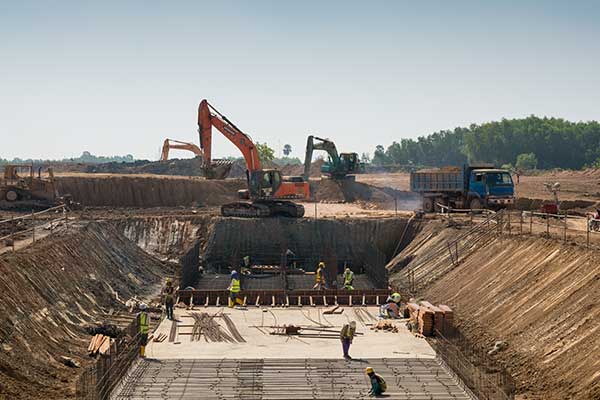
Building on Spring Branch acreage means solving a set of problems that do not exist on a lot with a street in front of it. There is no driveway. Power may be a quarter mile away or further. The septic field has to work on thin soil over rock. And before any of that, something has to be built that a concrete truck can actually drive on. Hill Country Land Clearing prepares homesites across this area.
A pad nobody can reach is not progress, so on most tracts here the road comes before anything else. We clear the corridor, cut subgrade, install culverts or a proper crossing where a draw is in the way, and place and compact base so that concrete trucks, lumber deliveries, propane, and eventually a moving van can all make it in. Grade is the main constraint and a route that looks direct on a plat frequently has to be lengthened to hold a workable slope in wet weather.
Plenty of tracts have a drainage between the county road and the building site. A crossing has to handle the flow that draw receives during a real storm, not the trickle it carries most of the year. Undersizing it means losing the crossing, and losing the crossing on a remote property means losing access entirely until it is rebuilt. Culverts, a properly built low water crossing, or a longer route avoiding the draw are all options depending on flow and grade.
Shallow limestone defines excavation here and it cuts both ways. Cutting a pad into a slope often means ripping or hammering rather than digging, which is a real cost line. The offset is that the material coming out, processed and compacted, is excellent base for the road you just built, so rock that costs money to excavate offsets base you would otherwise truck in from a long way off. That balance is a large part of why we walk a site before quoting.
On site sewage here has to work with thin soil over rock, which narrows both system type and placement. The field location has to be fixed before pad grading, because you cannot run construction traffic across a future drain field or place fill over an area the design depends on. Same goes for the well and its access. If a well is not yet drilled, its location and the route to it need thinking about now rather than after the pad is finished and the good approach is under a slab.
Properties out here usually need more than a house pad. Storage tanks, a pump house, a generator, propane, and often a barn or shop all need level, compacted, drained ground. Water storage in particular is worth siting thoughtfully, since a full tank is heavy and its position affects both pressure and how easily it can be filled by a hauler in a dry year. Building these while equipment is already mobilized costs far less than bringing it back.
Comal County handles on site sewage, platting, and floodplain matters. There is no city here. If your tract sits inside one of the ranch developments, the architectural committee will have its own rules on siting, driveway materials, and clearing limits. The owner or builder holds these approvals. We work within them and schedule around the timelines rather than assuming they will resolve themselves.
Service to a remote homesite is rarely close by. Electrical runs of several hundred feet or considerably more, water lines from a well that may sit well away from the house, and the trenching or boring to connect them all have to be routed before the pad is finished. Rock makes trenching expensive, so route selection genuinely matters, and where a line would cross a preserved oak motte, going around is worth the extra footage.
Good rural site prep tries to balance cut and fill on the tract so you are not paying to import dirt and export spoil at the same time. Topsoil stripped from the footprint gets stockpiled and reused at final grade rather than hauled off and bought back. Excavated limestone often crushes into usable road base, which matters a great deal here where trucking material in means a long haul from the nearest supplier.
Site preparation across Spring Branch, Bulverde, Canyon Lake, Startzville, Fischer, Blanco, Wimberley, Boerne, New Braunfels, and throughout Comal, Kendall, Blanco, and Hays counties.
Send the plan or the address with photos of the access route. Call 210-942-1961.
On most tracts here, yes, since a pad nobody can reach is not progress. We clear the corridor, cut subgrade, handle culverts or a crossing where a draw is in the way, and place and compact base so concrete trucks and deliveries can make it in. Grade governs the design, and routes are often lengthened to hold workable slope.
A crossing sized for what that drainage actually receives during a real storm rather than what it carries day to day. Options are culverts, a properly built low water crossing, or lengthening the route to avoid it. Undersizing means losing the crossing, and on a remote property that means losing access until it is rebuilt.
It is the largest variable on most sites here, depending on soil depth and rock hardness. Rippable material moves far more cheaply than material needing a hammer. The offset is that excavated limestone makes excellent road base once processed, which matters especially here because trucking base in from a distance is expensive.
Both before grading. On thin soil over rock the septic options are narrow enough that placement drives other decisions, and construction traffic across a future field compacts it. If the well is not drilled yet, think about its location and access route now, rather than discovering the good approach ends up under a slab.
Yes, and it is worth doing while equipment is mobilized. Storage tanks, pump houses, generators, and propane all need level, compacted, drained ground. Water storage is worth siting thoughtfully since a full tank is heavy and its position affects both pressure and how easily a hauler can fill it in a dry year.
Comal County handles on site sewage, platting, and floodplain. There is no city. If your tract is inside a ranch development, the architectural committee adds its own rules on siting, driveway materials, and clearing limits. The owner or builder holds all of these approvals, and we work within them.
Wide range. A straightforward pad on an accessible tract can be days. A site needing a new road, a crossing, significant rock excavation, and utility corridors can run several weeks. Weather and approval timing cause most of the slip. We give a schedule with the quote and update it as field conditions become clear.